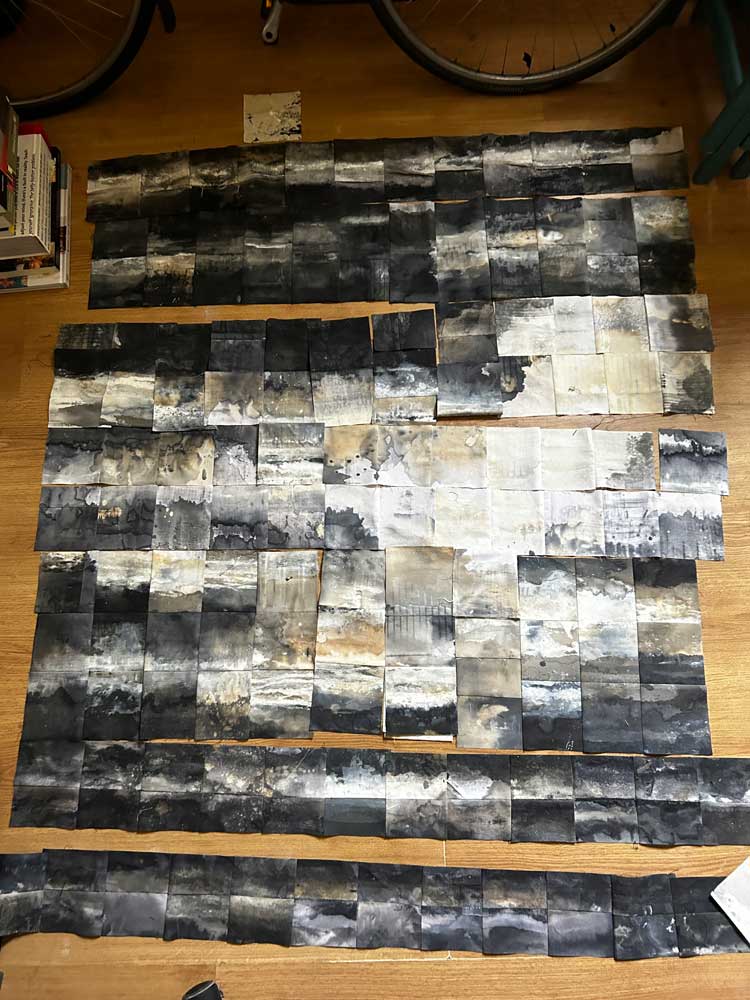
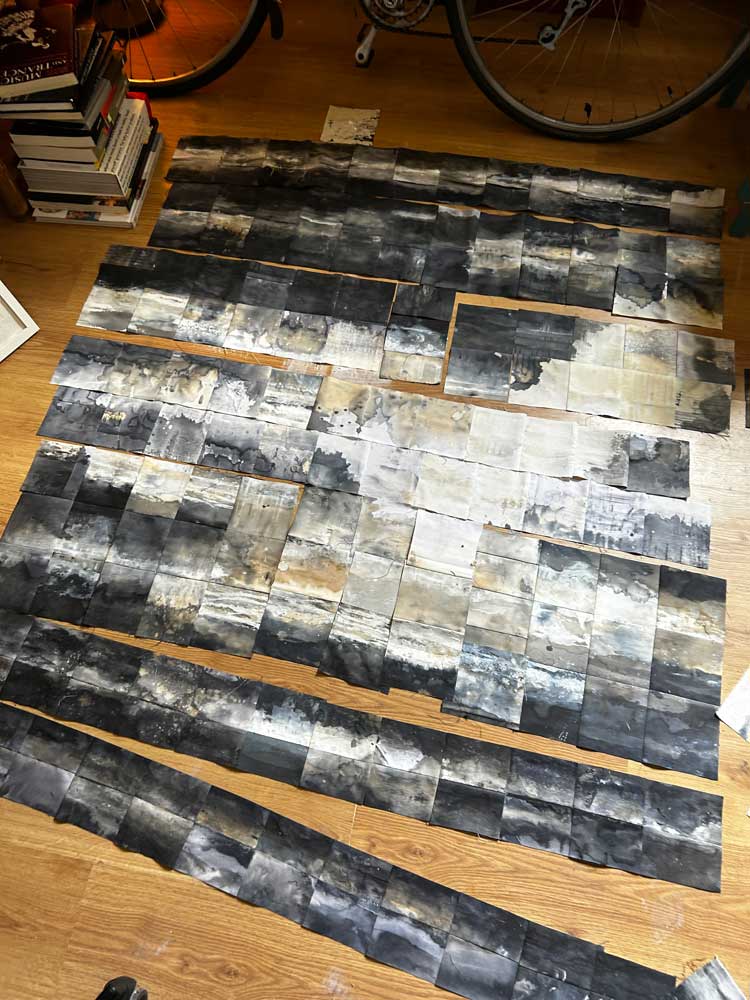
Quilt 11: Micro dramas
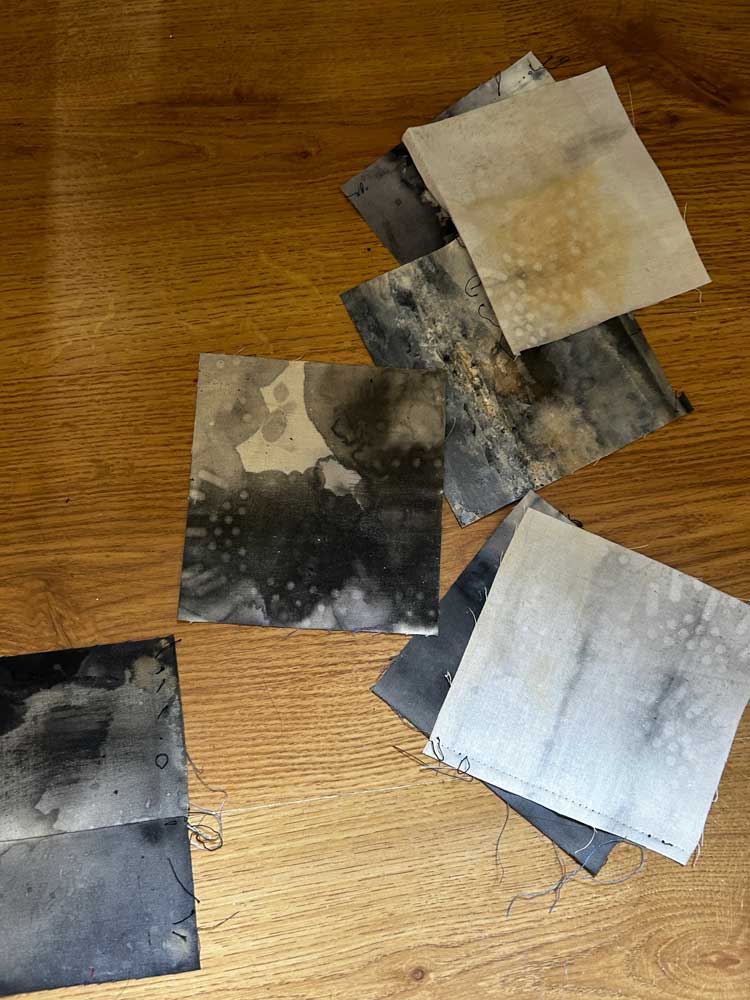
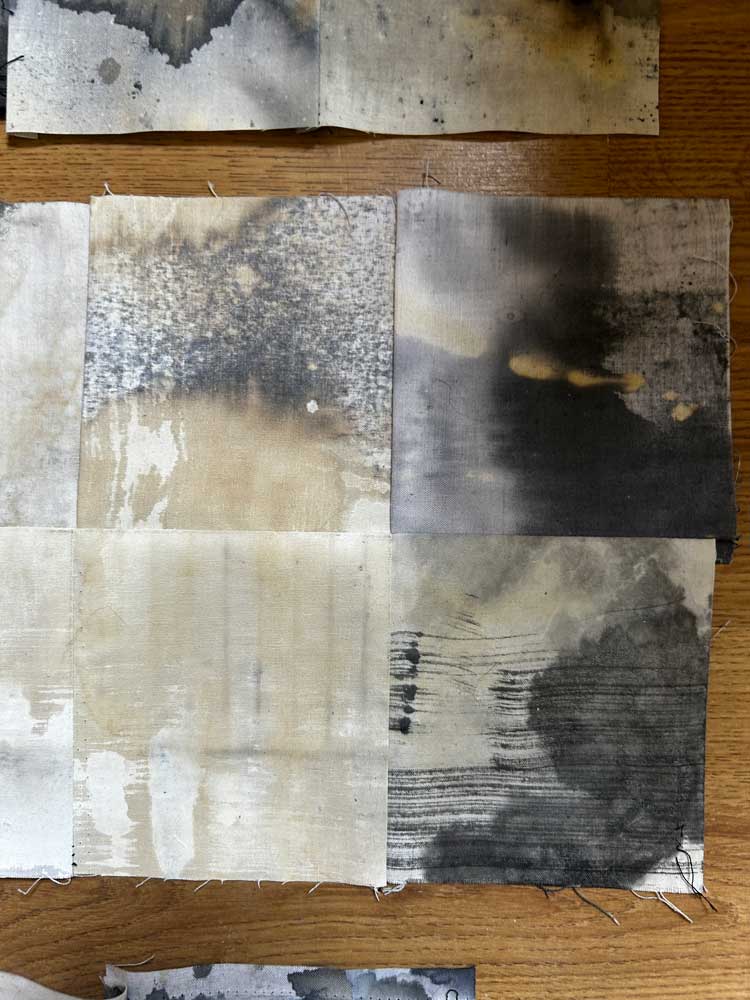
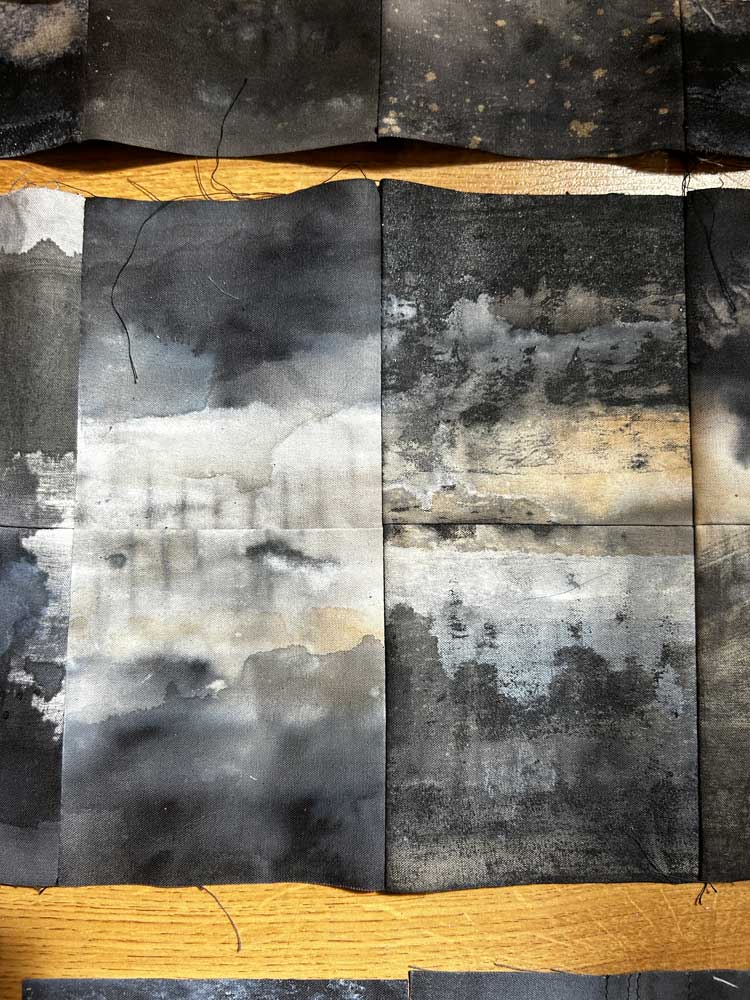
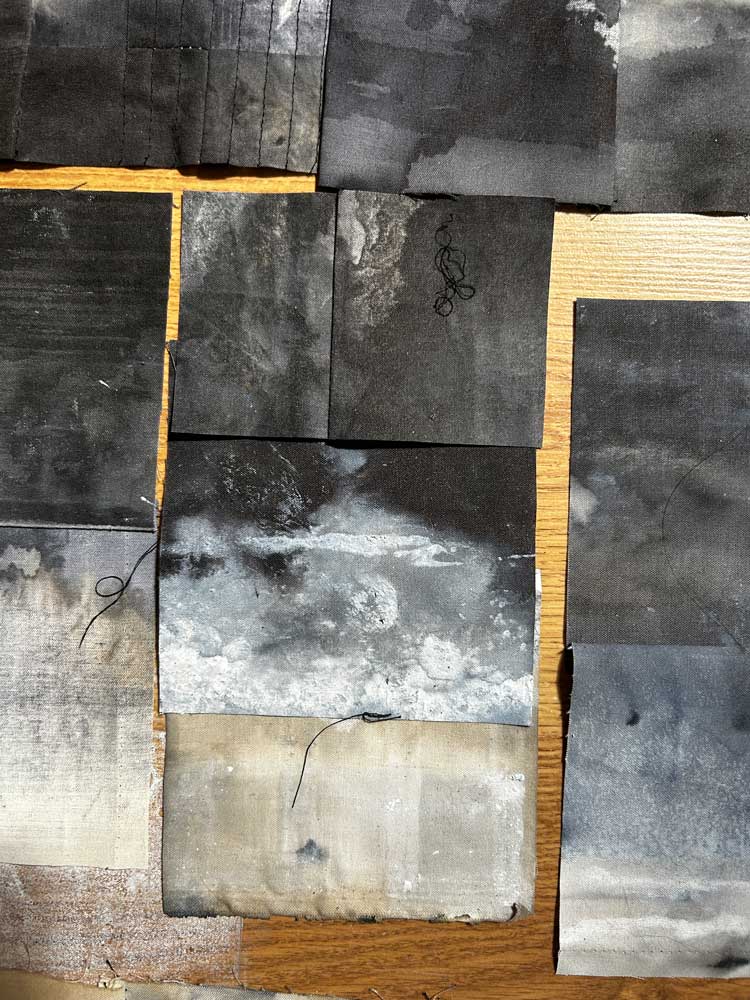
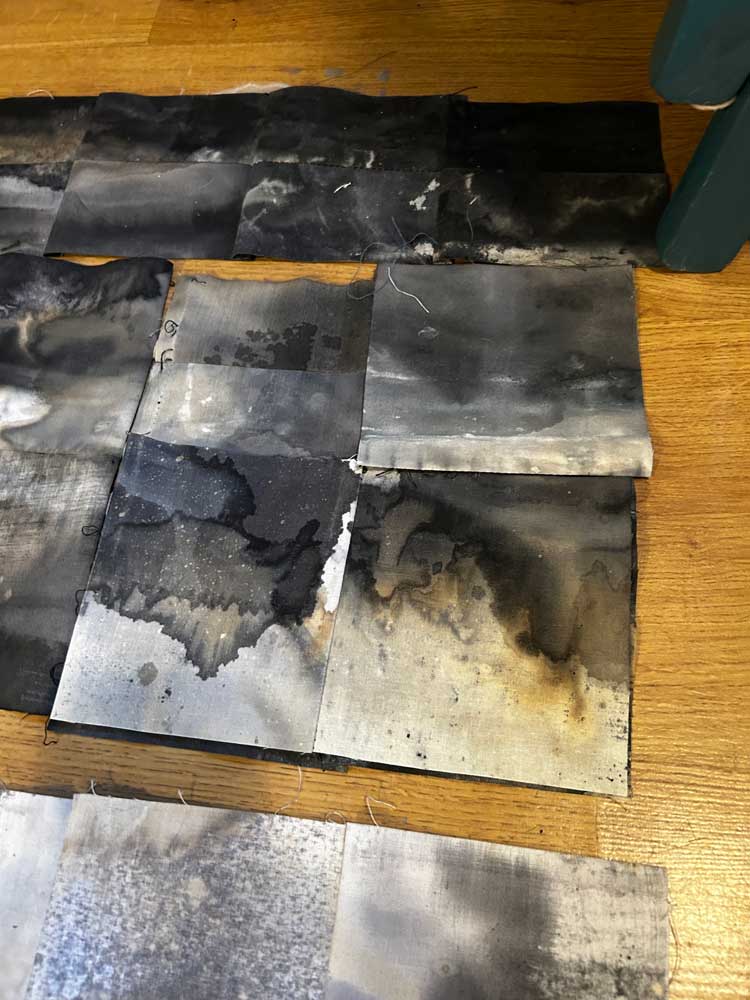
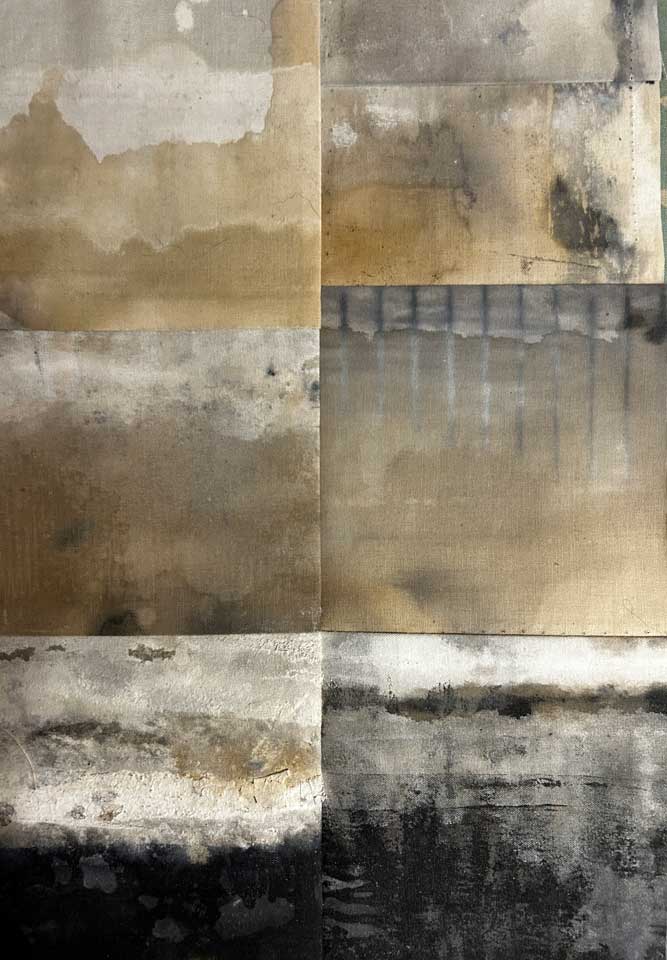
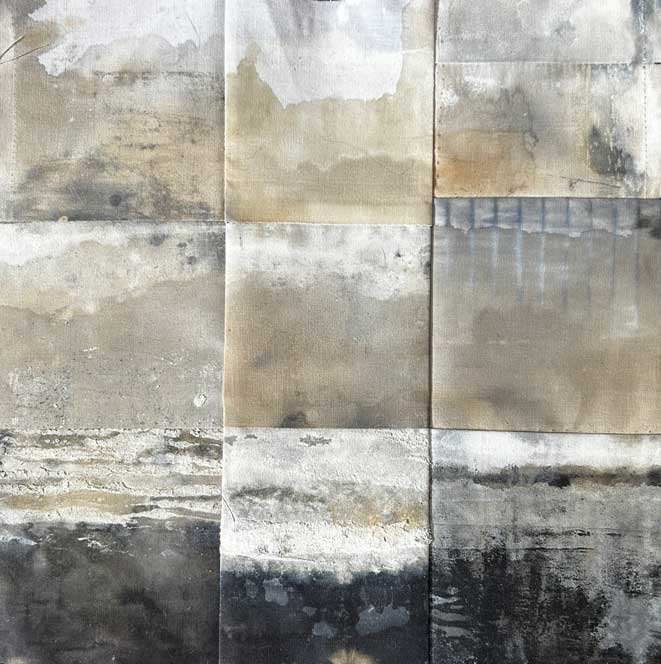
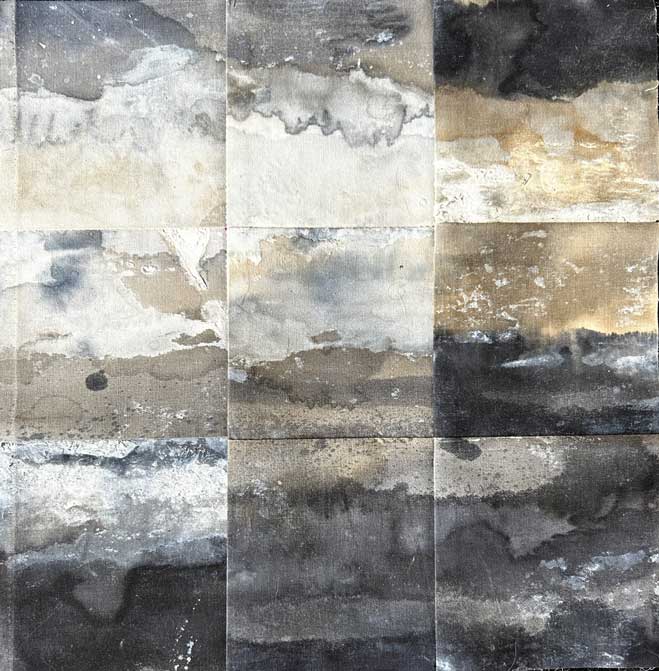
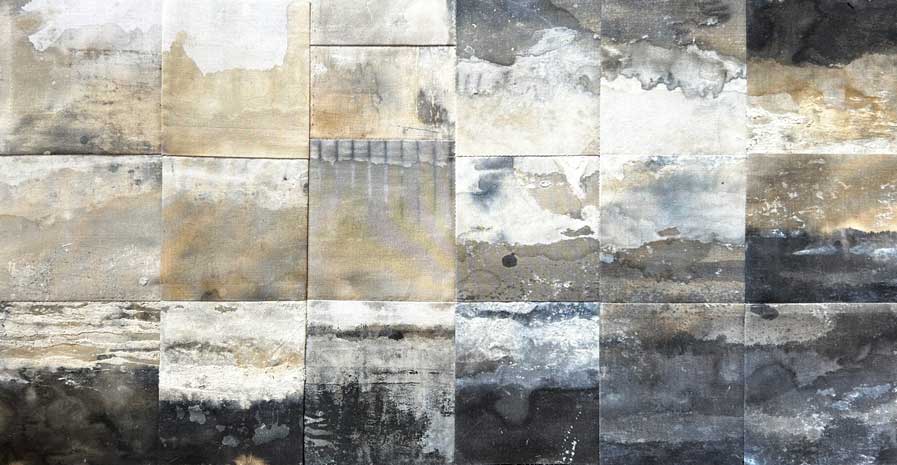
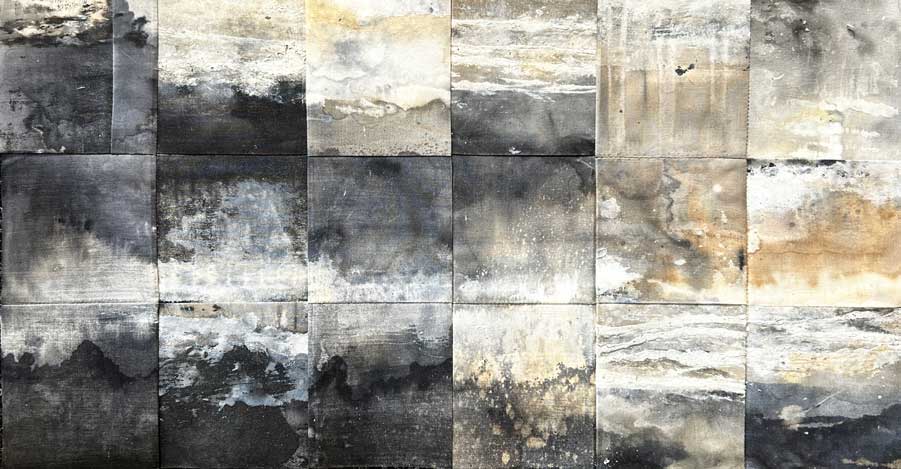
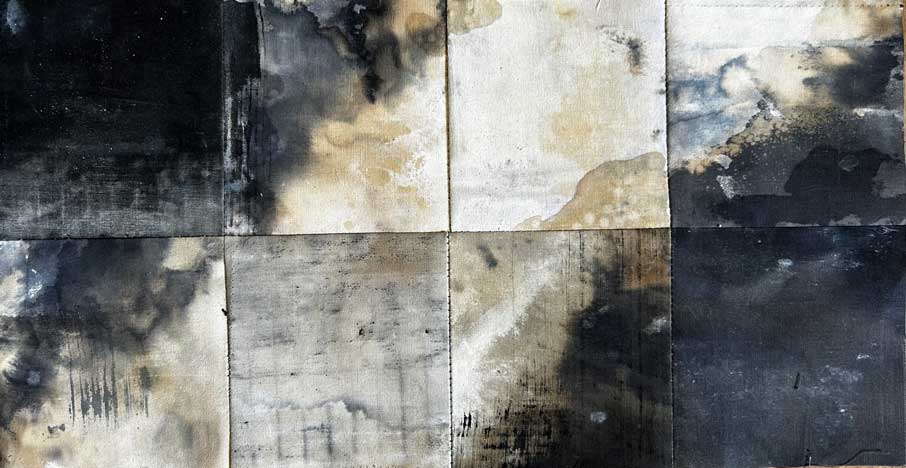
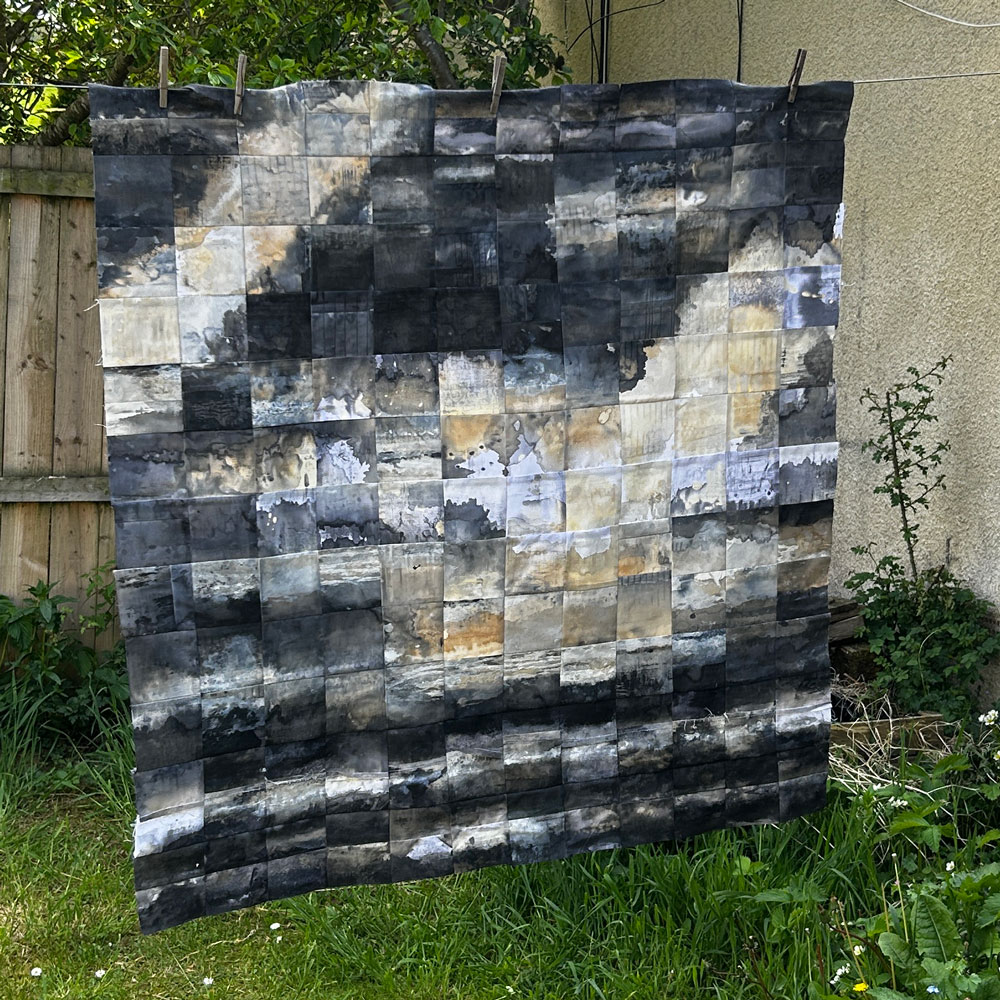
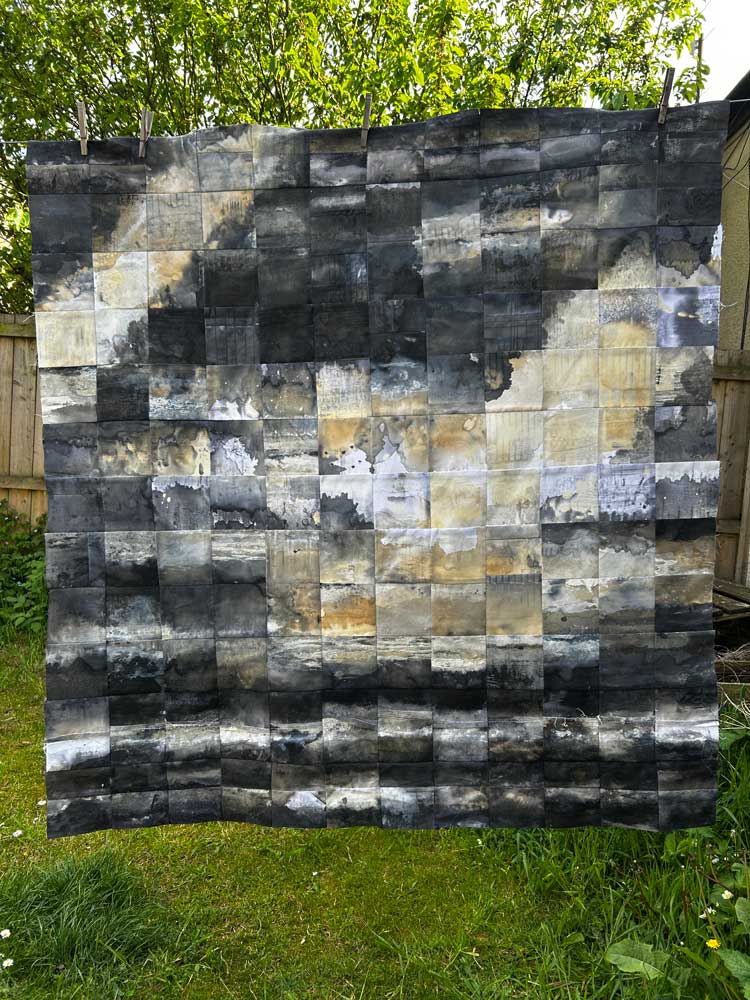
This quilt is constructed from squares painted, stained, dipped, washed, rubbed, bleached, and smeared. As I was making the textures, I thought of each square as a micro drama: a collision and conflict between the fabric, me, and the mark making media. The result is a formal experiment comprising layers of marks that reflect time and the physicality of working with wet media on a dry surface.
Of course the quilt still tells a story, but I have sunk the content backwards while still making warning diagonals that reflect my wider practice at the moment. Instead, it is the form that shouts, as a whole, but also in minute, individual ways as the viewer comes closer.
It is here that the agency of the object is at its most revealing. The quilt is not simply a quilt anymore but instead a collection of instances that never fully reveal themselves. I like Graham Harman’s philosophy of Object Oriented Ontology, which supports the claim that all the squares exist equally as objects rather than in a hierarchy where humans dominate matter. The apprehension of the work as a quilt falls away here. It could never be used as such: it is not waterproof, or warm, or soft. Instead, as OOO contends, it intersects materials and systems as active participants rather than passive mediums.
Although not the same, New Materialist thinkers such as Jane Bennett, Karen Barad, and Rosi Braidotti argue that matter is not a stable ‘thing’, but a dynamic process. In this sense, a textile is not simply an isolated object, but something that emerges through political and cultural critique. The work emerges through labour, trade, colonial history, touch, fibre chemistry, gendered craft traditions, circulation, and use, for example.