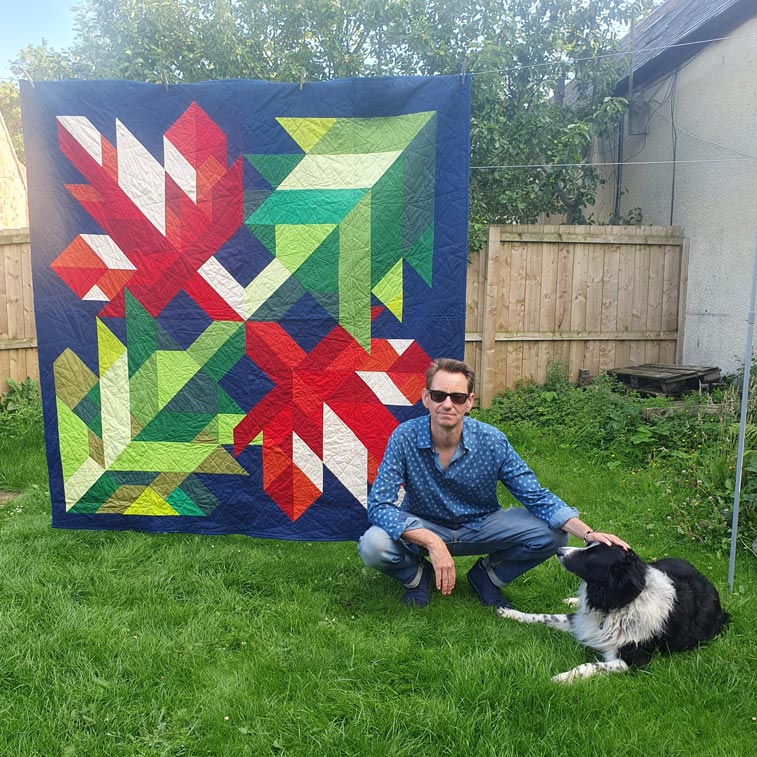
I have 3 wonderful and unique daughters. Imagine my delight and excitement when one of them announced that she was to marry her first love, a fantastic, confident young man from Toronto. What could I give the couple that have everything? A quilt of course!
Quilts have long been considered meaningful wedding gifts. They’re more than just practical blankets — they’re deeply symbolic objects loaded with cultural, emotional, and often communal significance.
At the most basic level, a quilt provides warmth and comfort — qualities that translate metaphorically into the wishes for a new marriage. Giving a quilt felt like offering my daughter and her new husband a home in fabric form: warmth against hardship, softness through challenges, and protection in their shared life. Quilts talk of togetherness and contact.
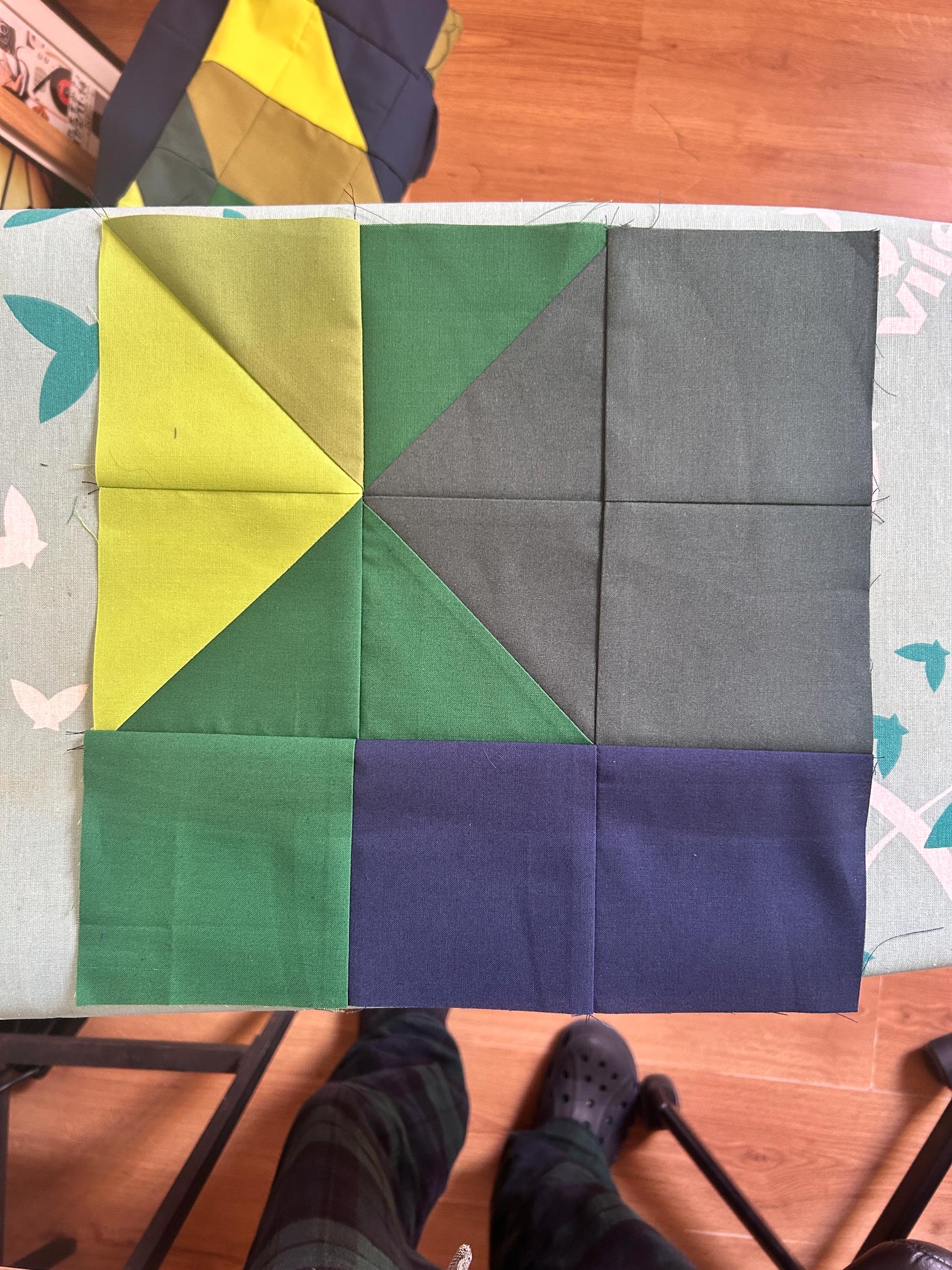
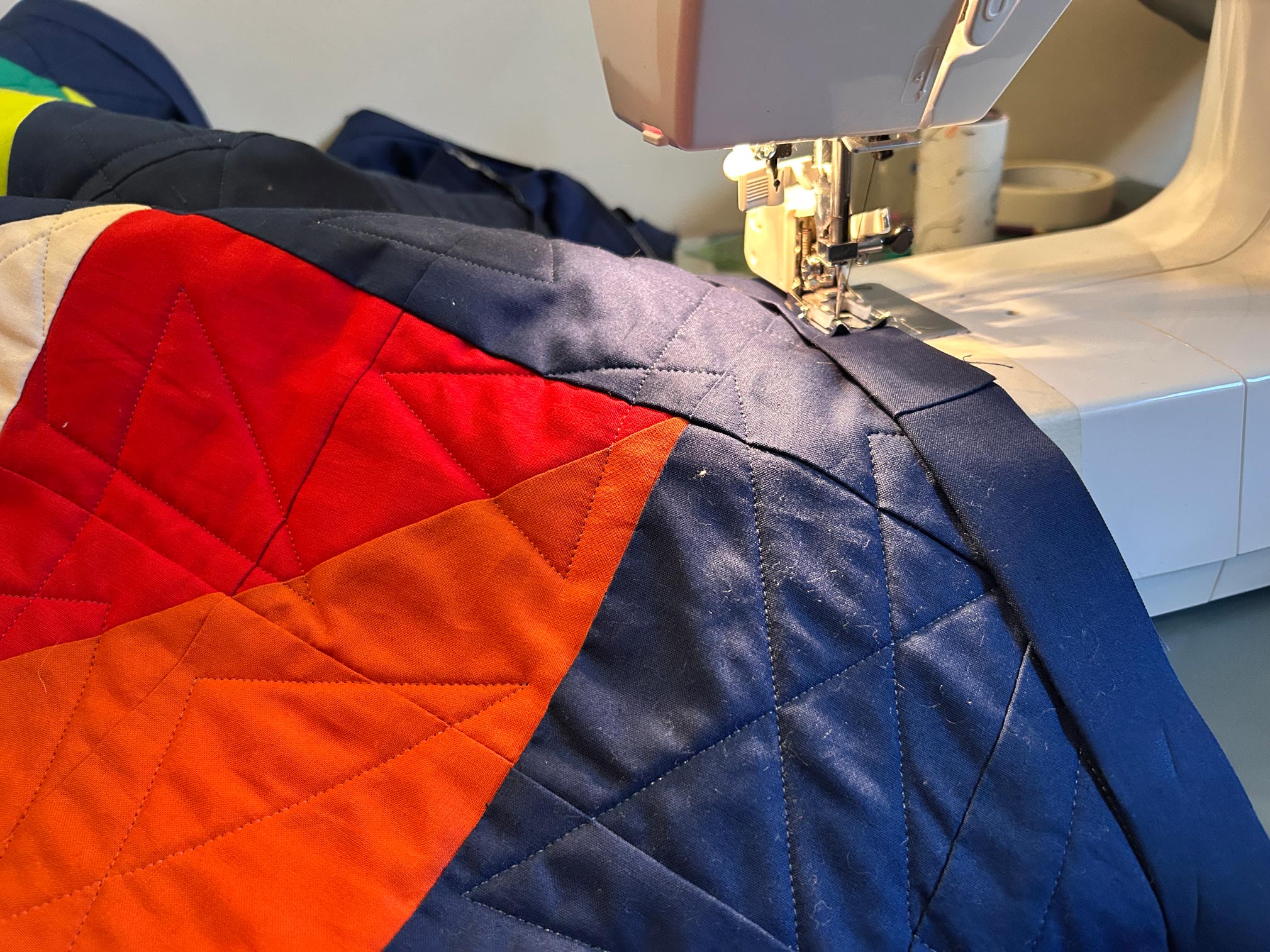
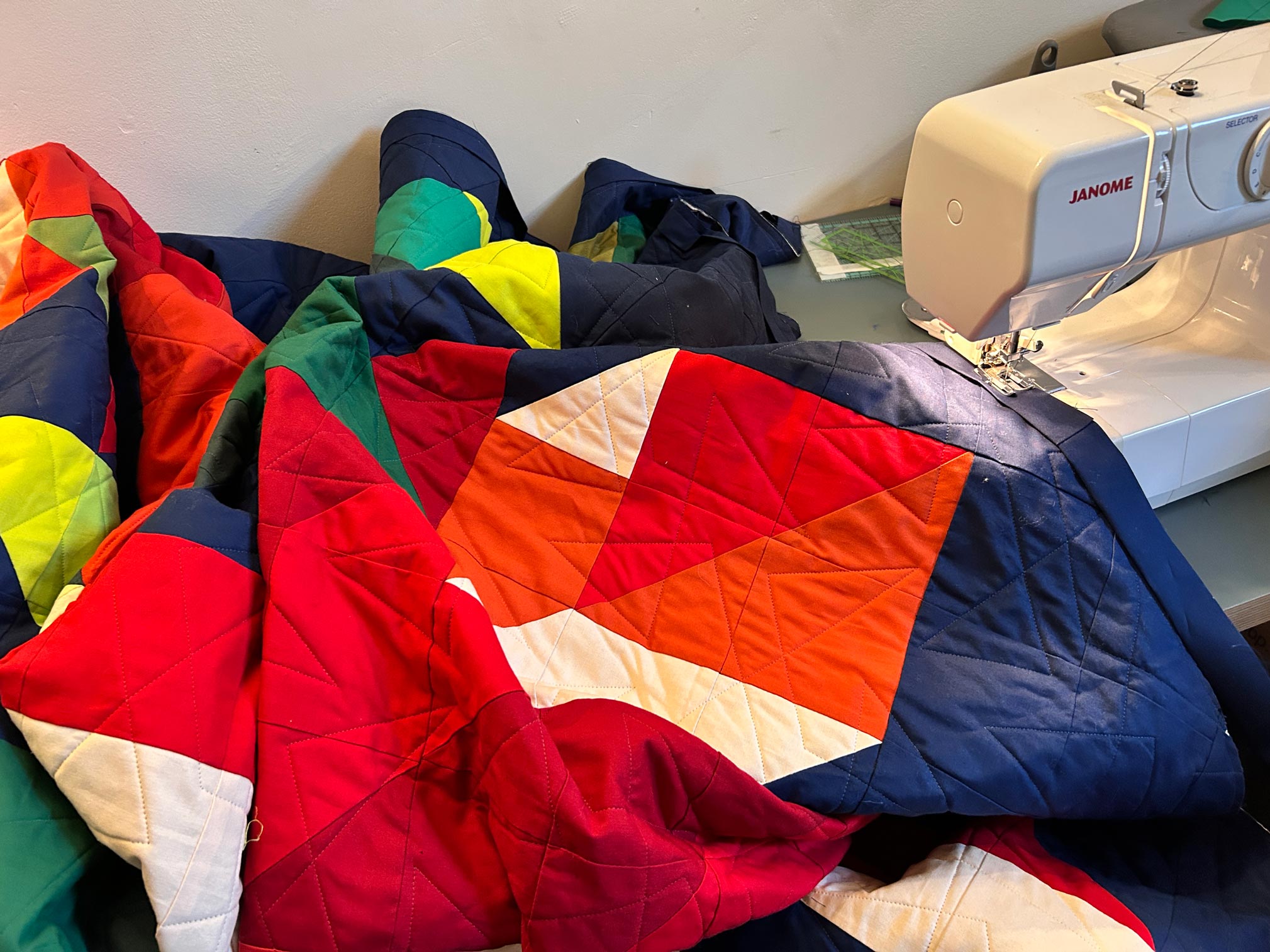
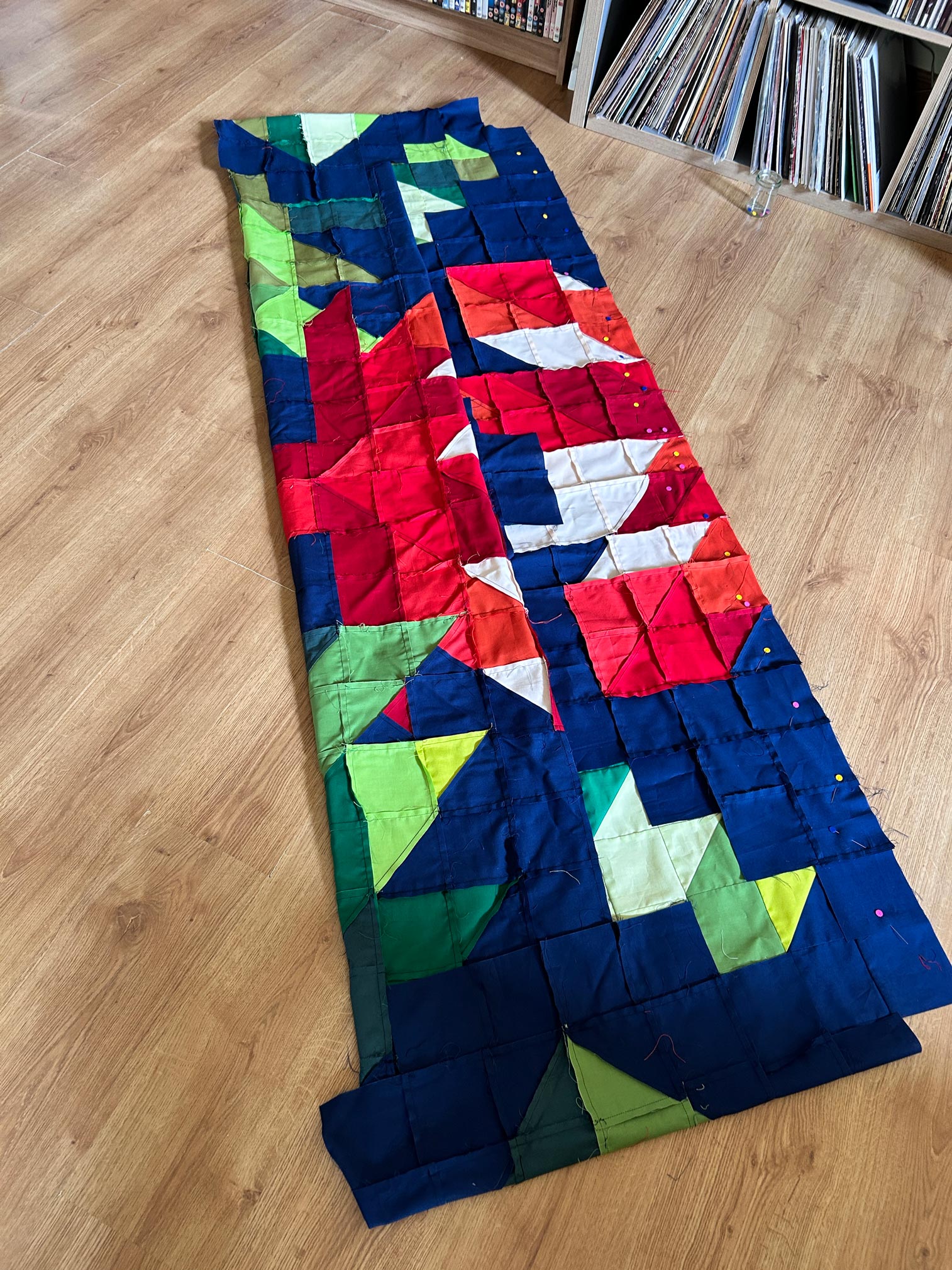
As with tradition, the quilt I gave was made by hand, requiring many hours (closer to months) of careful work. I believe that labour is itself a gift of love. I like to think that the quilt embodies my care, hopes, and blessings, the layers symbolising the many layers of a marriage: love, patience, compromise, joy, and shared experiences. Patchwork quilts, in particular, evoke the idea that life — and marriage — is pieced together over time from different fragments, creating something stronger and more beautiful than its parts.
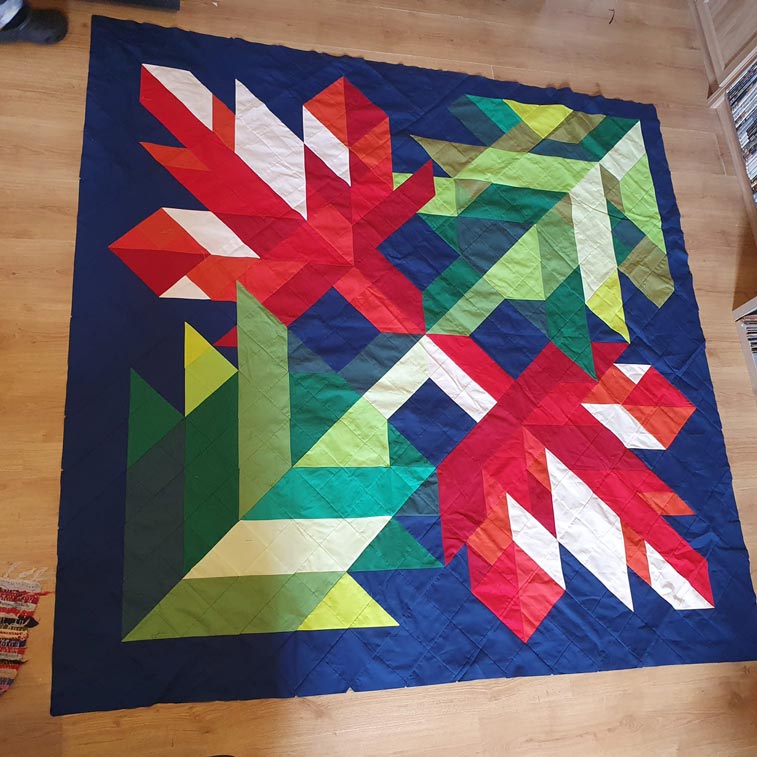
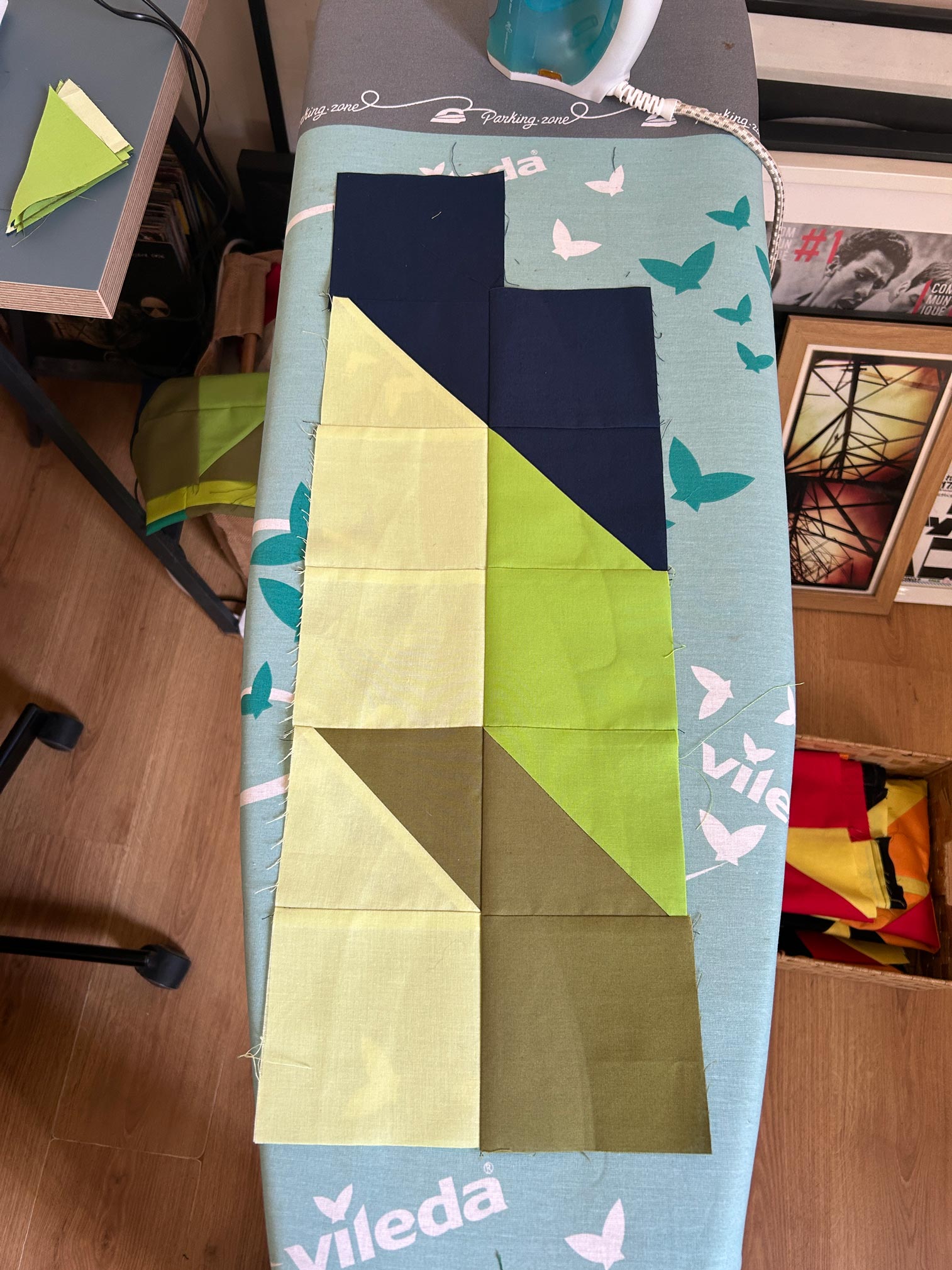
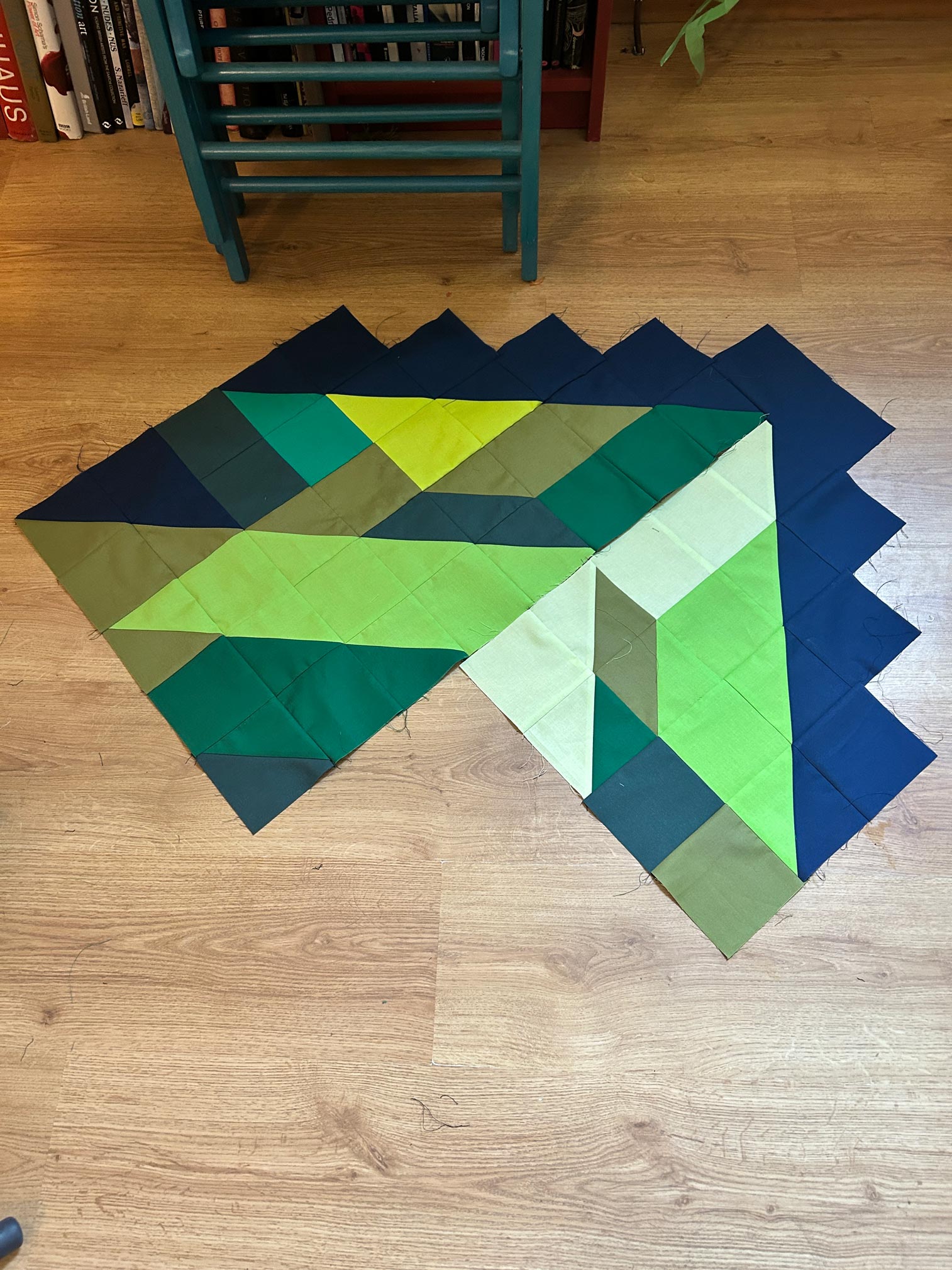
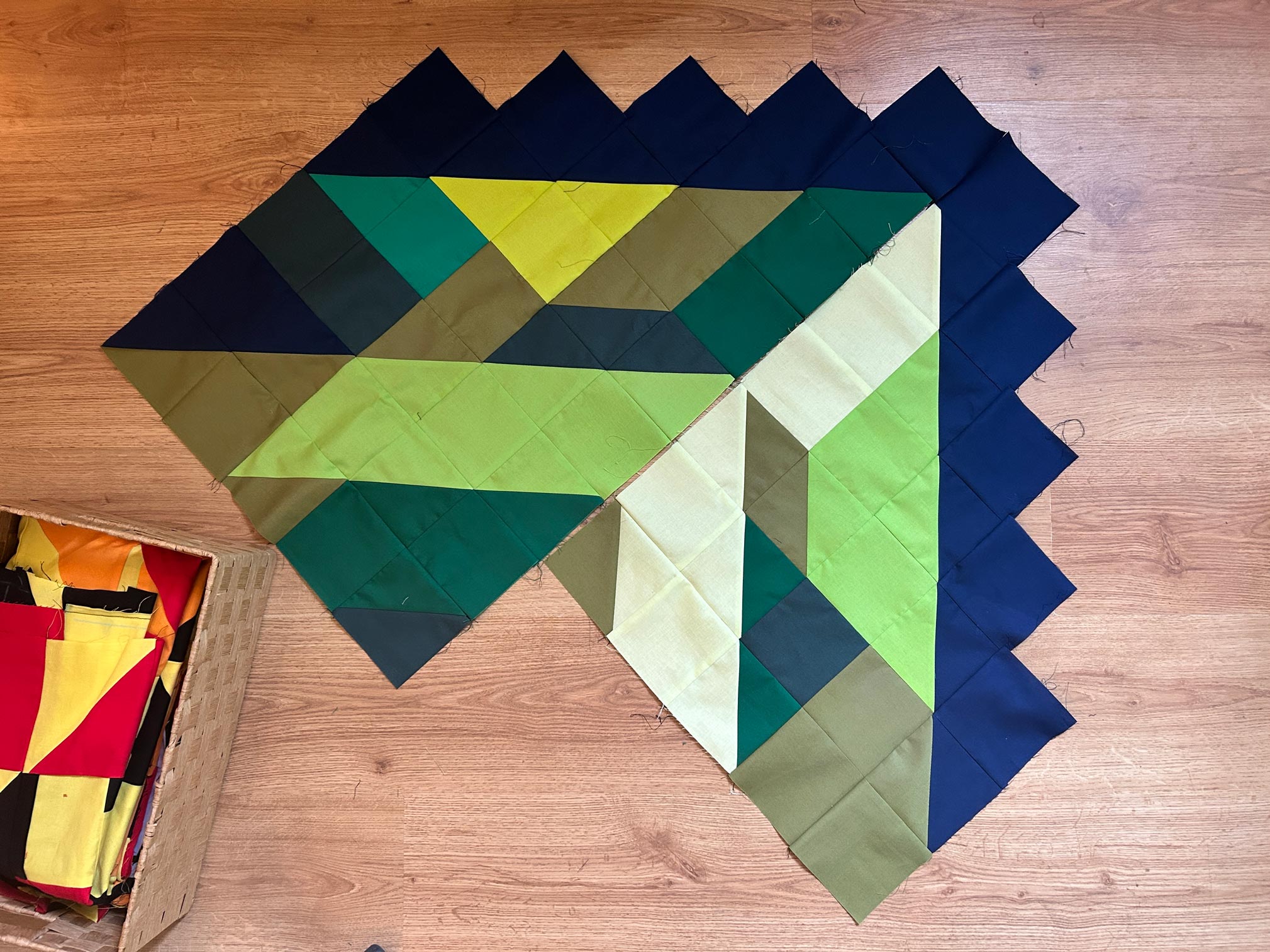
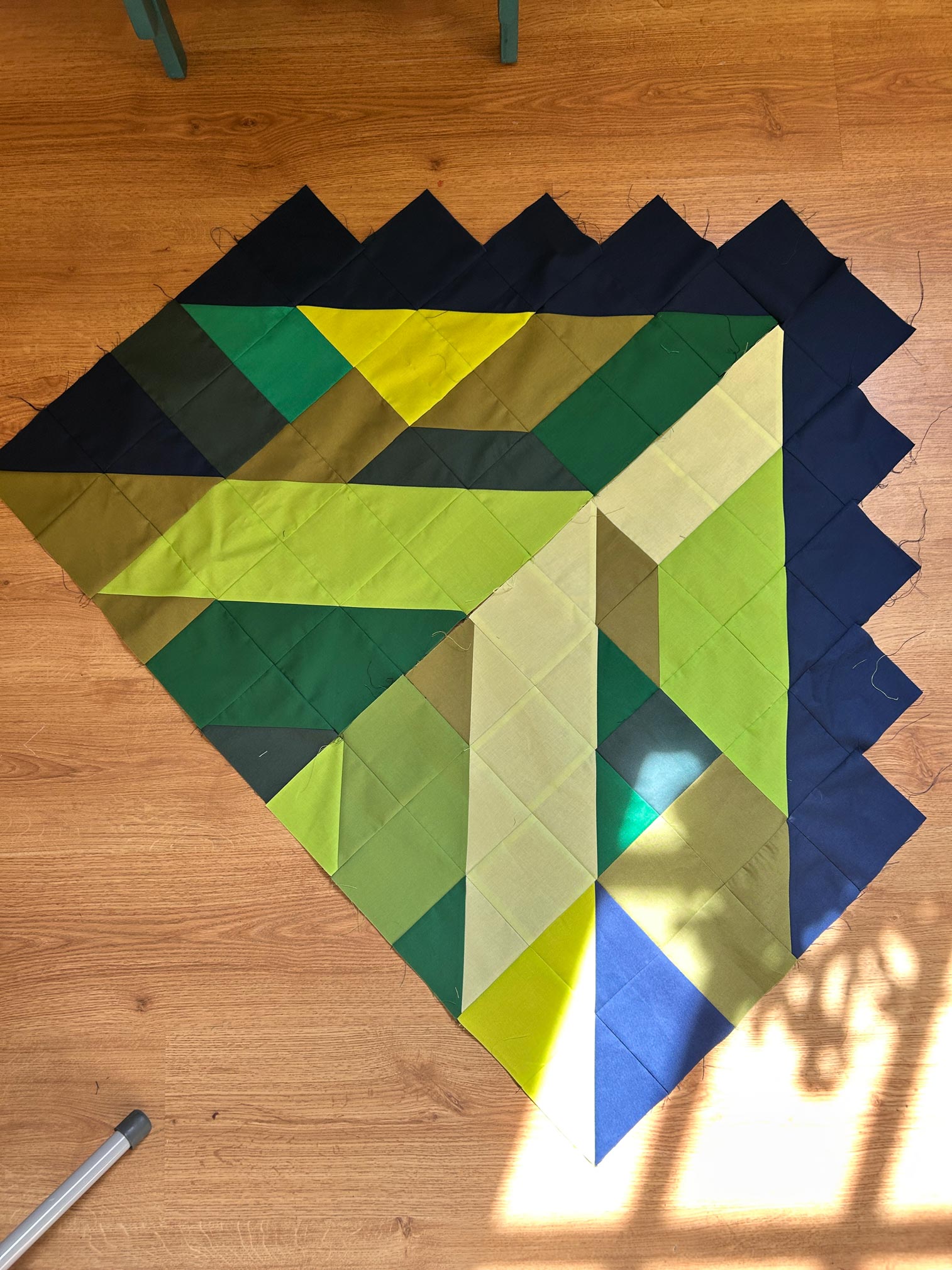
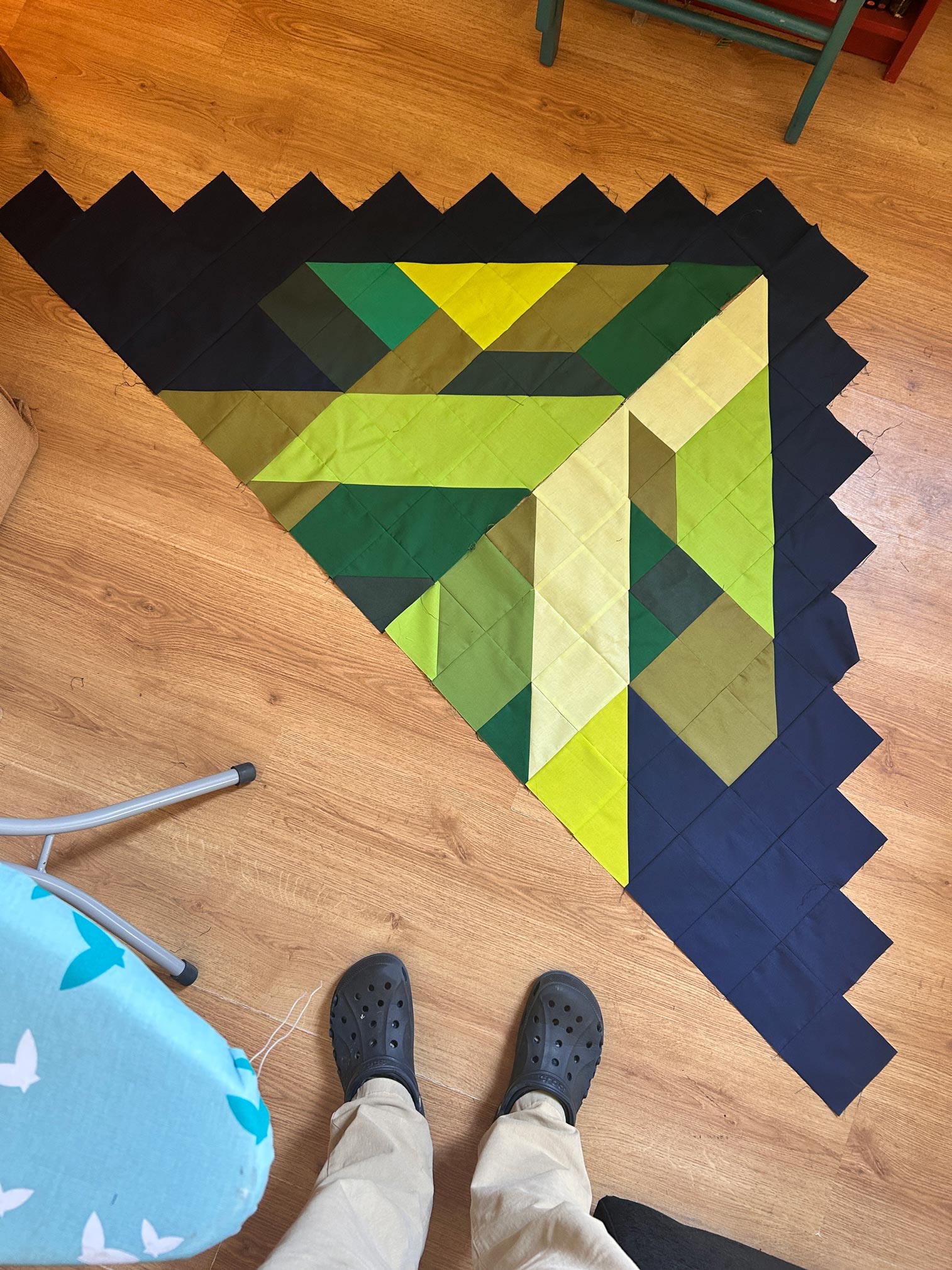
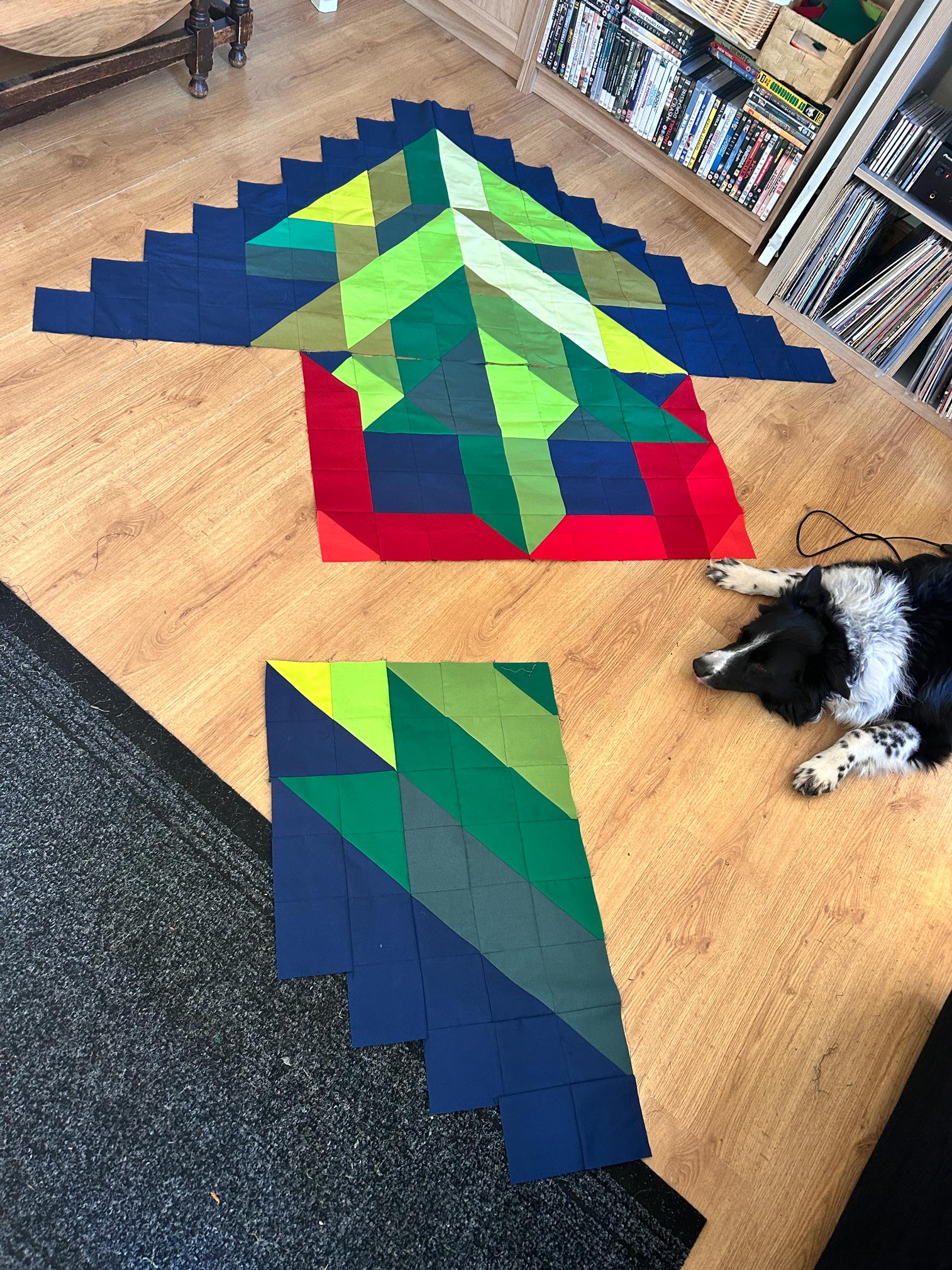
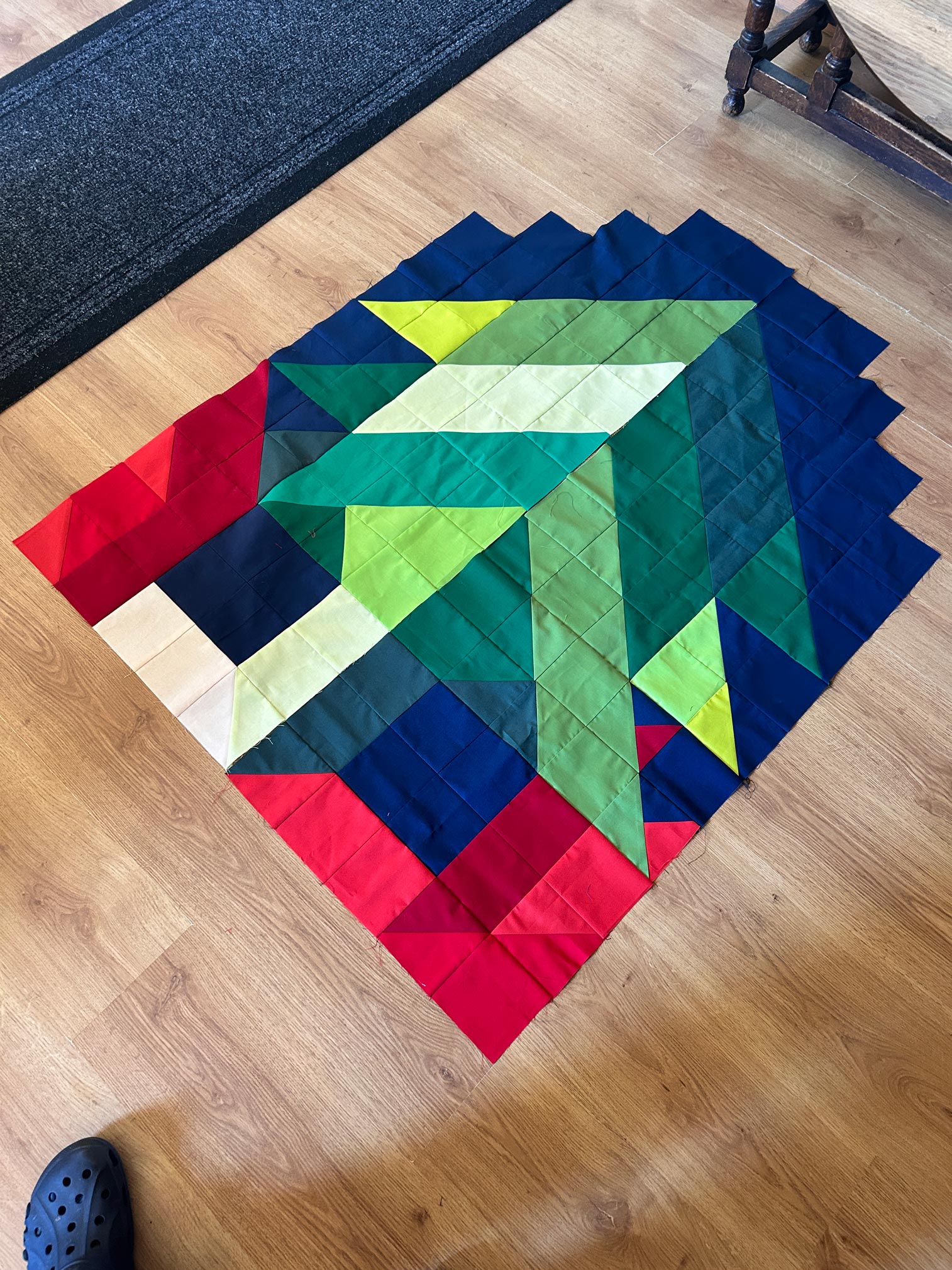
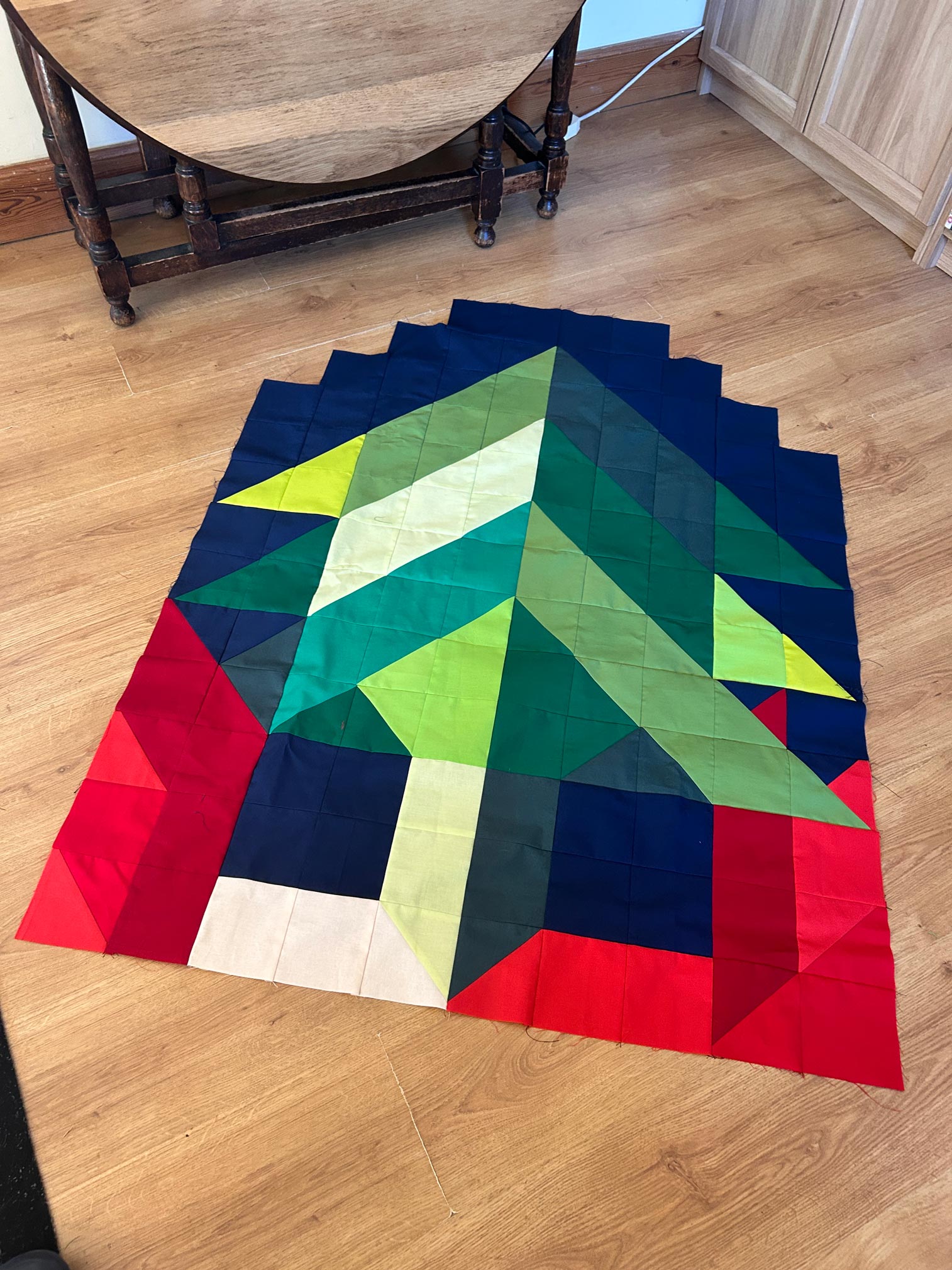
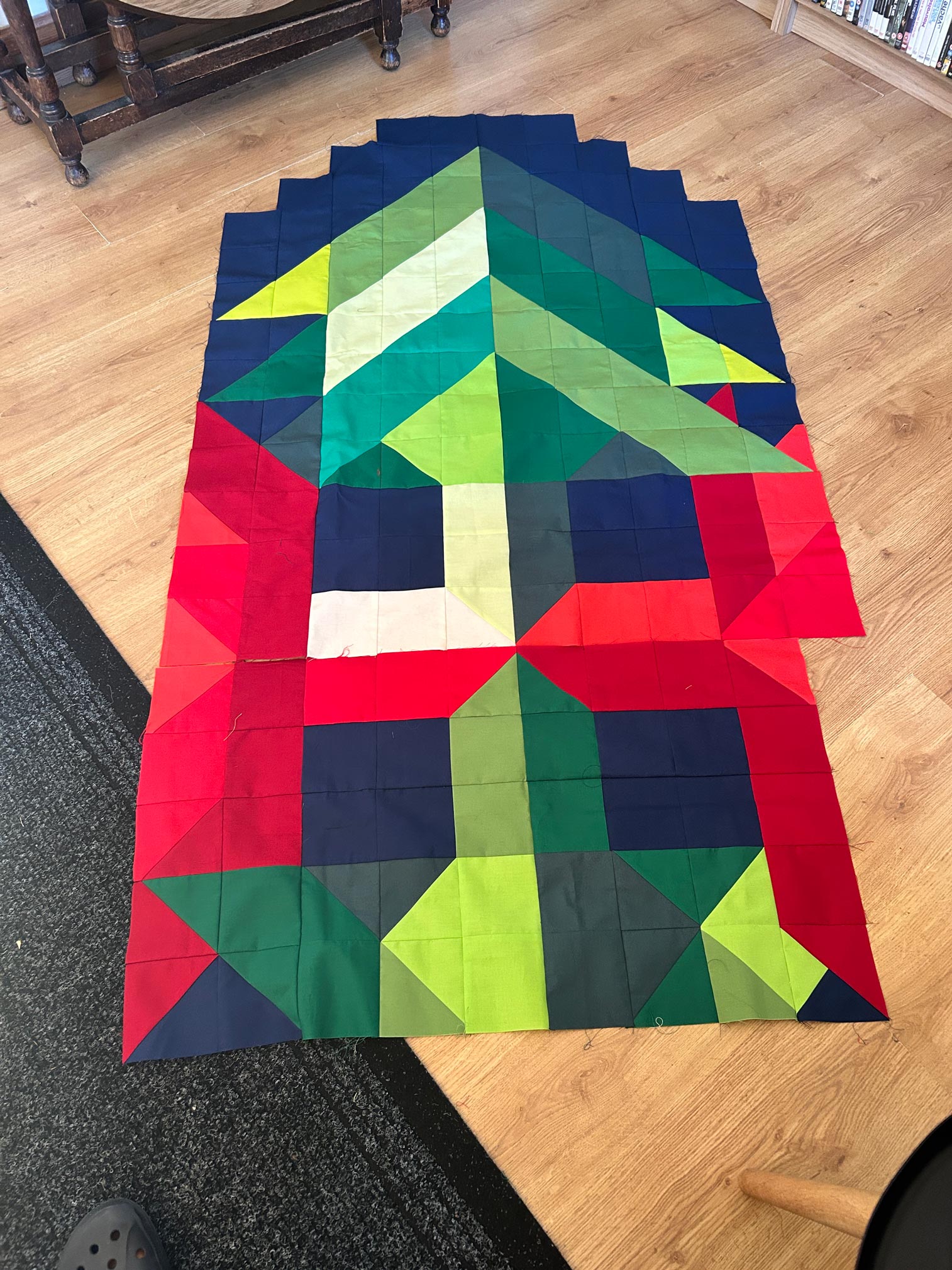
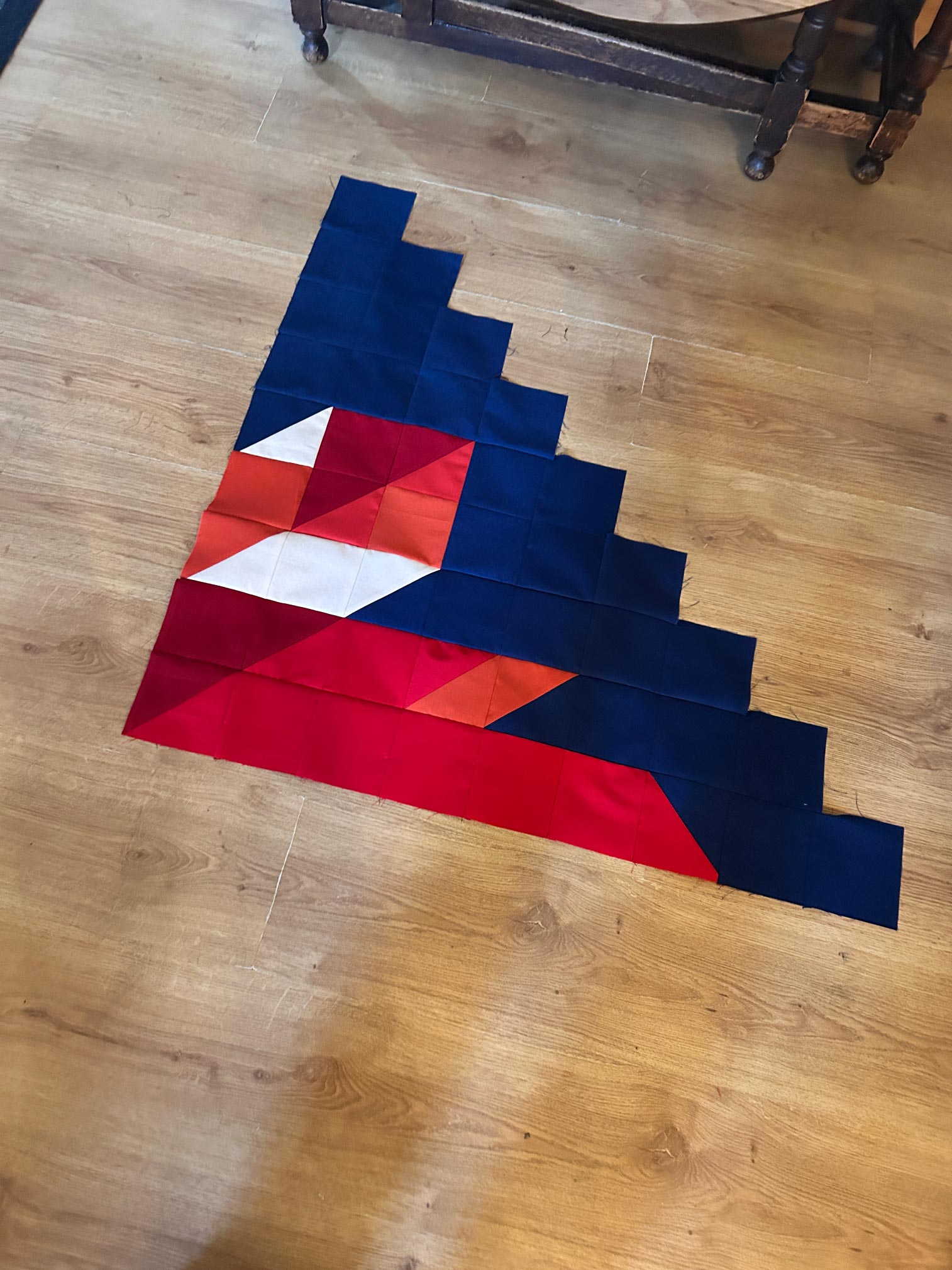
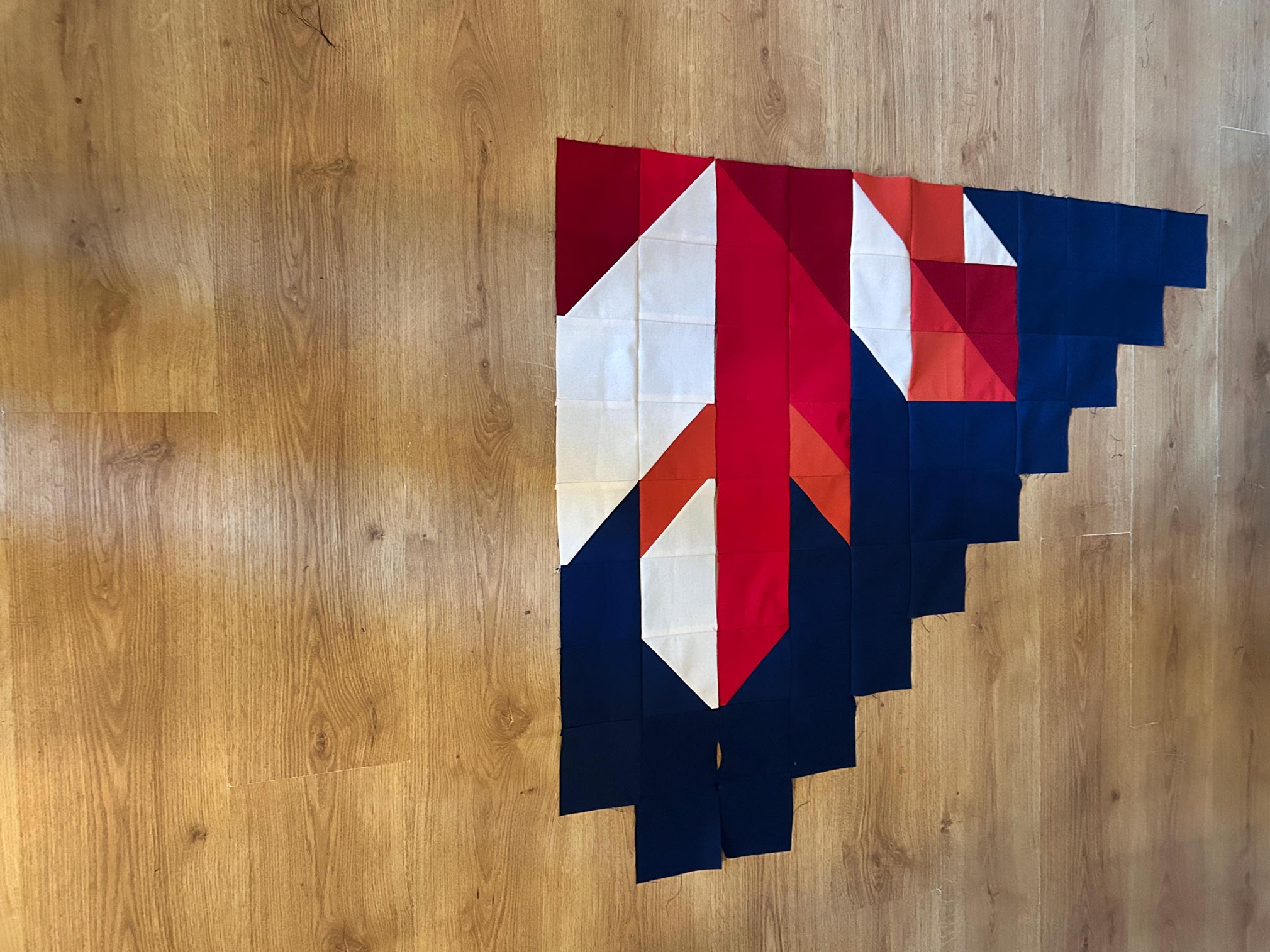
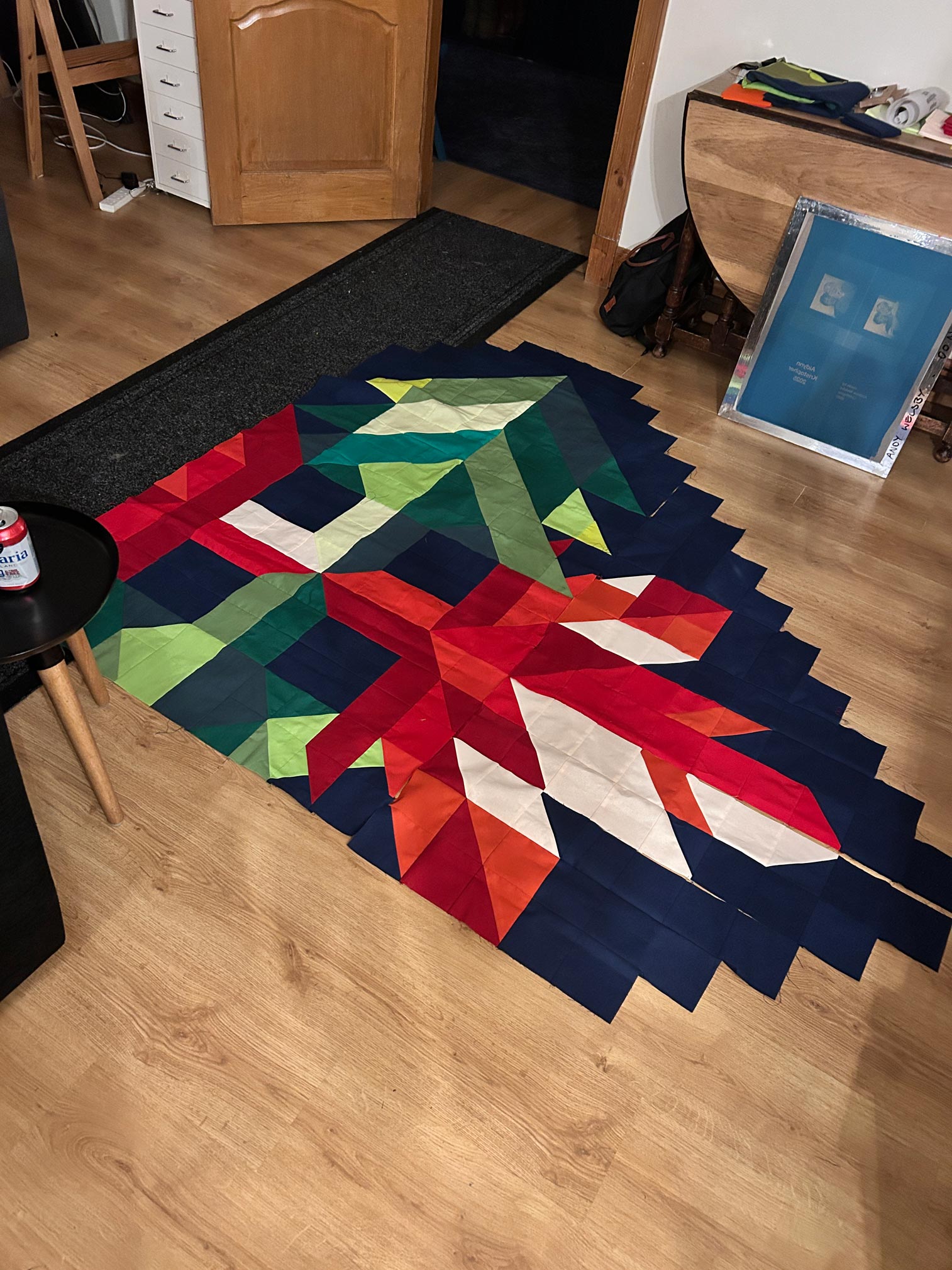
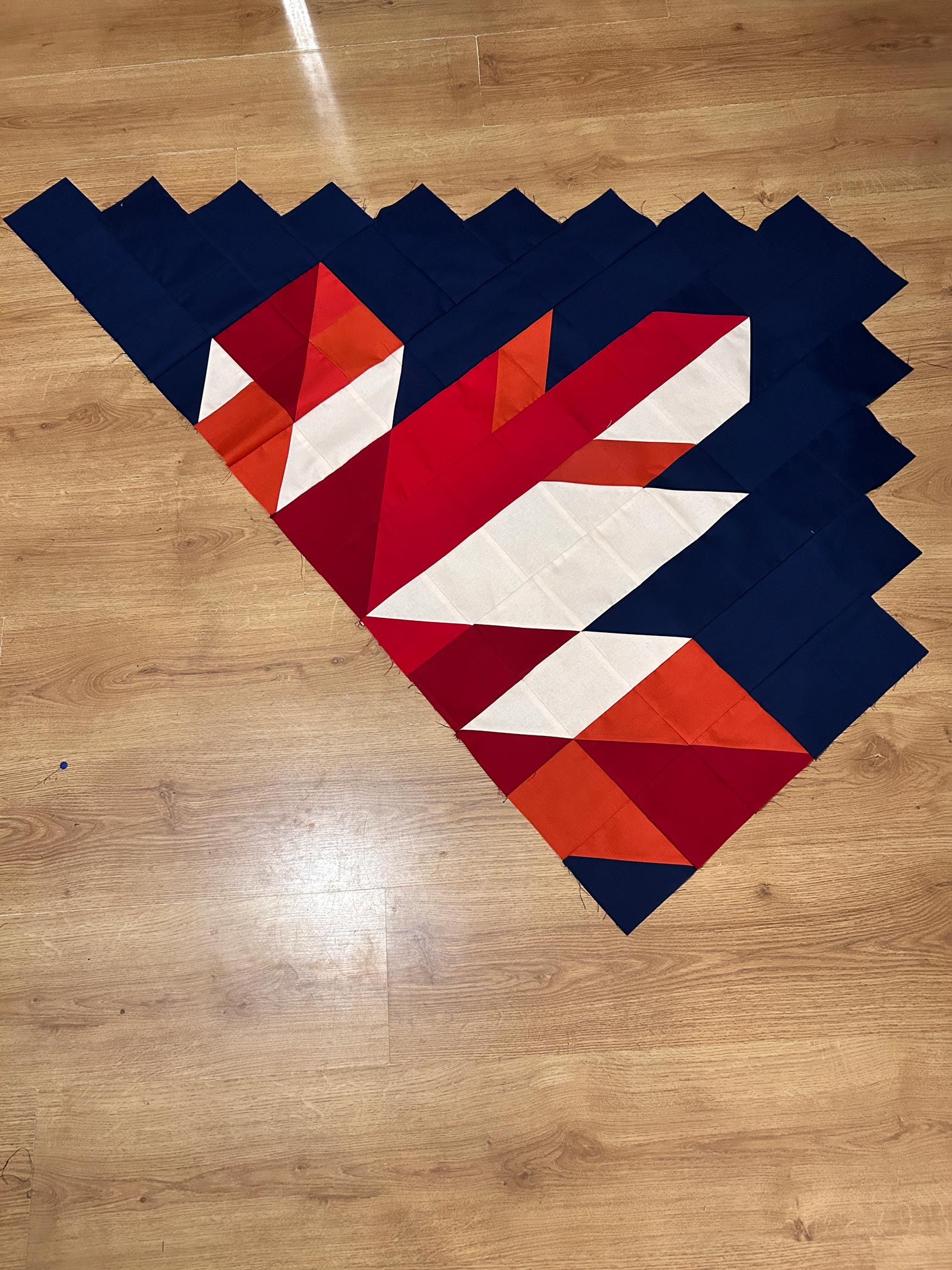
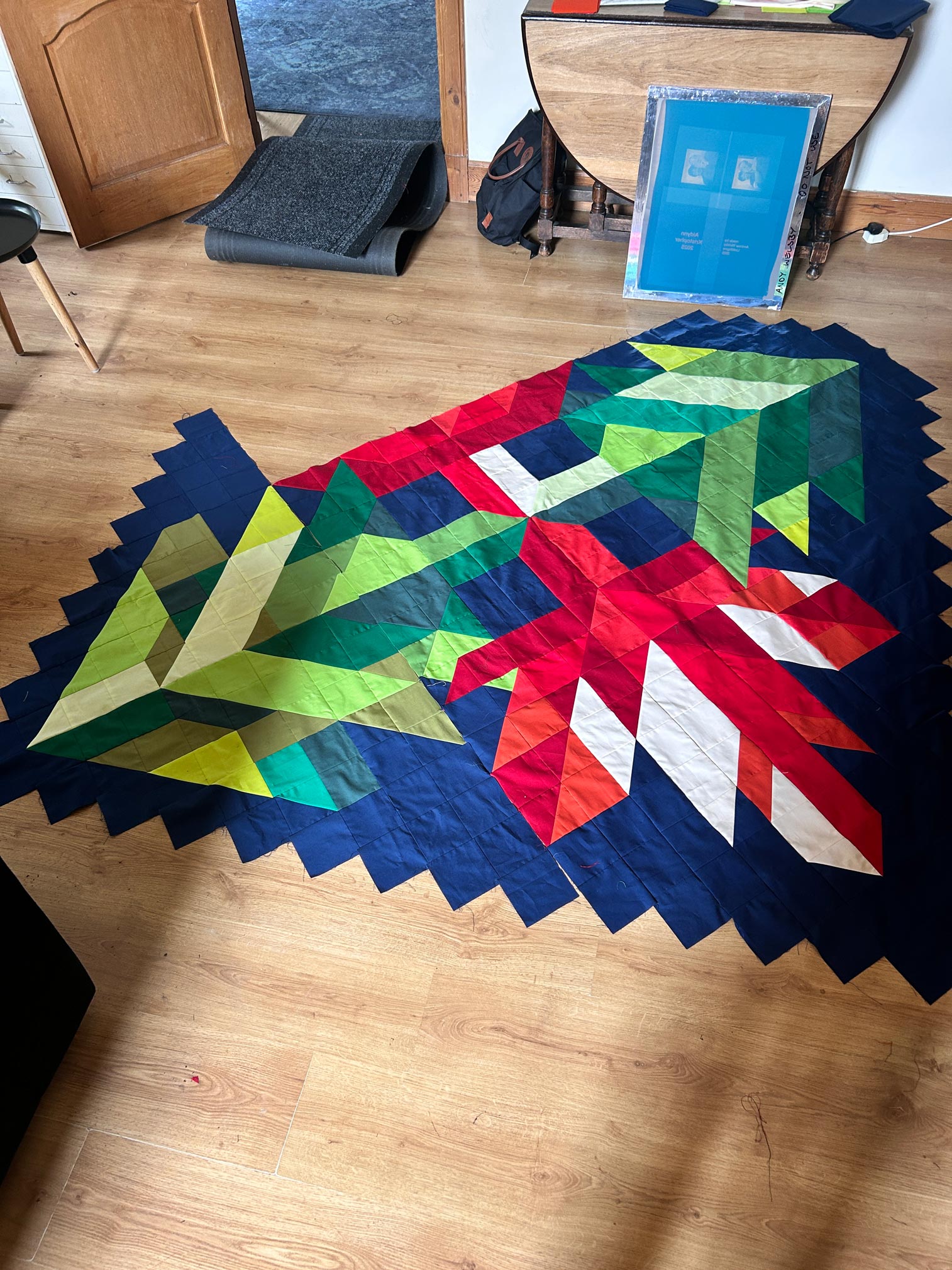
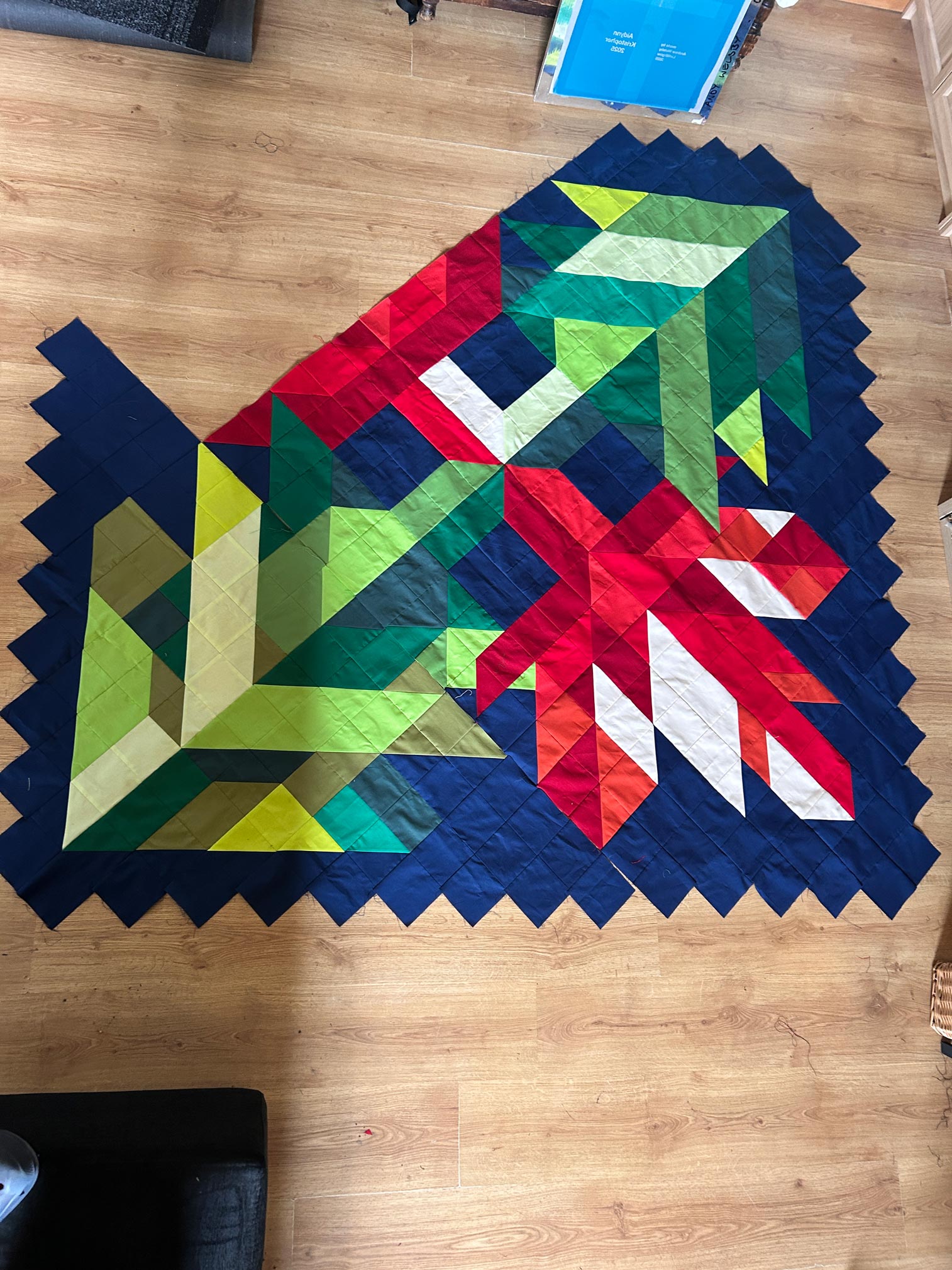
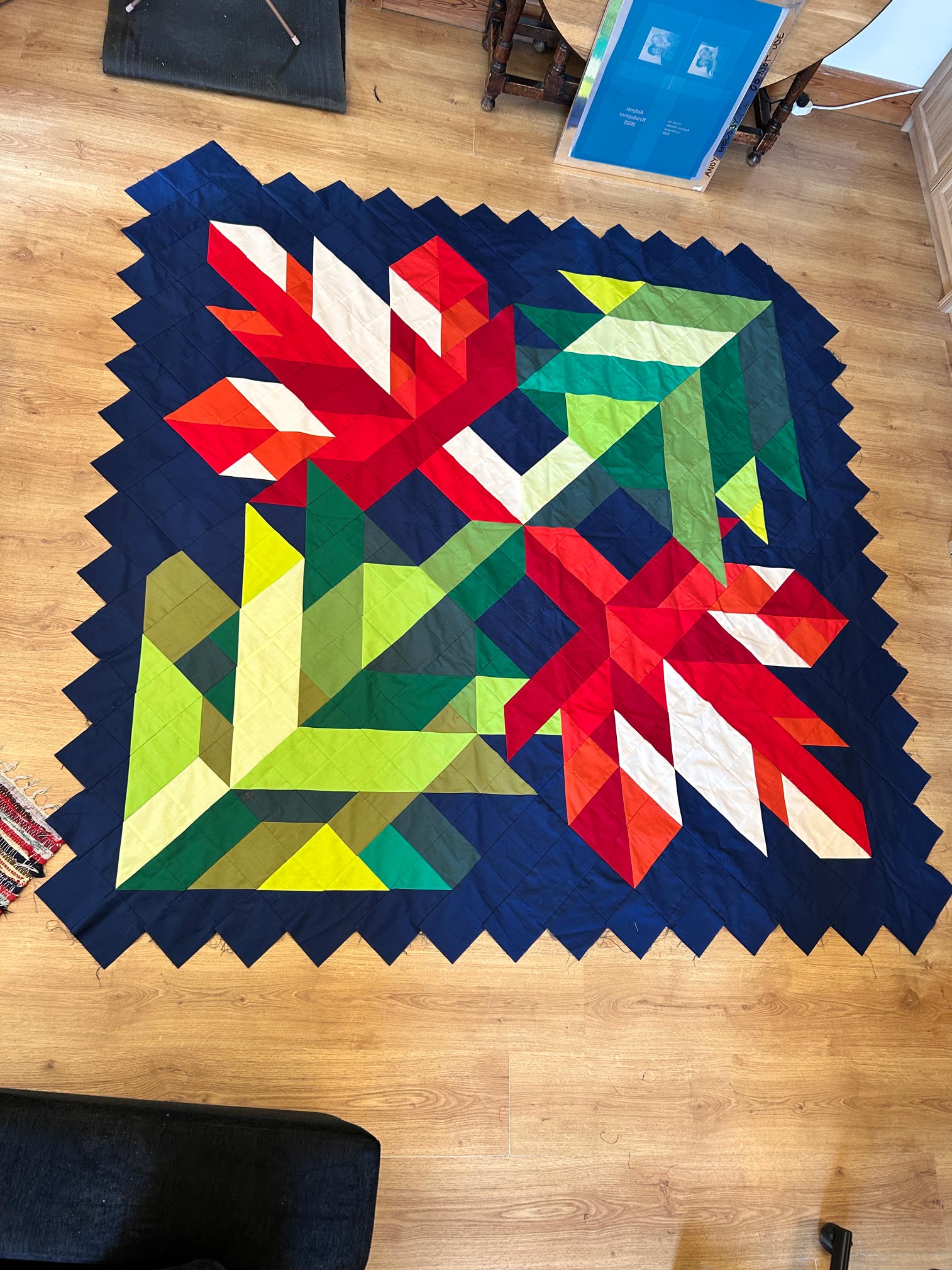
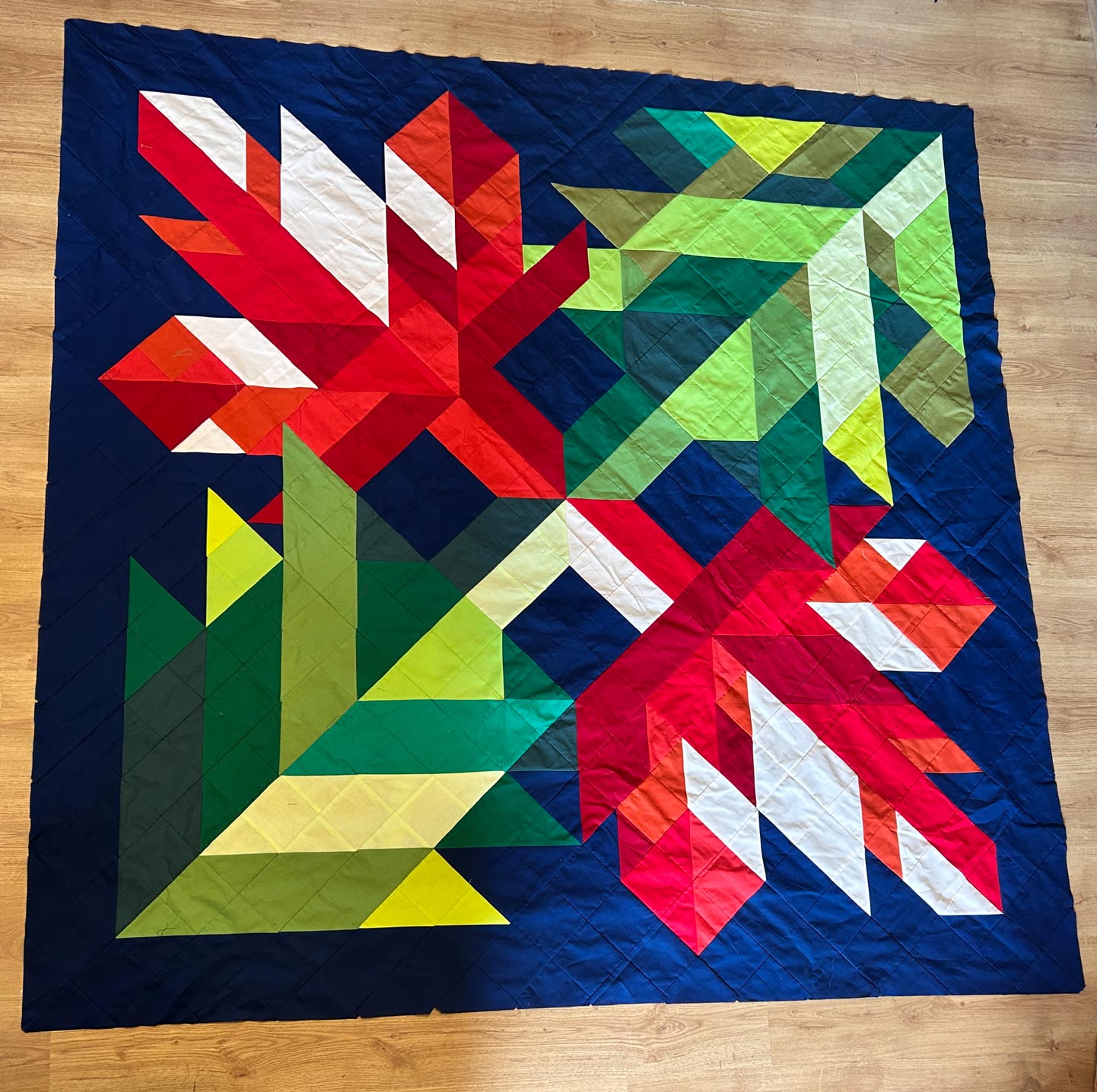
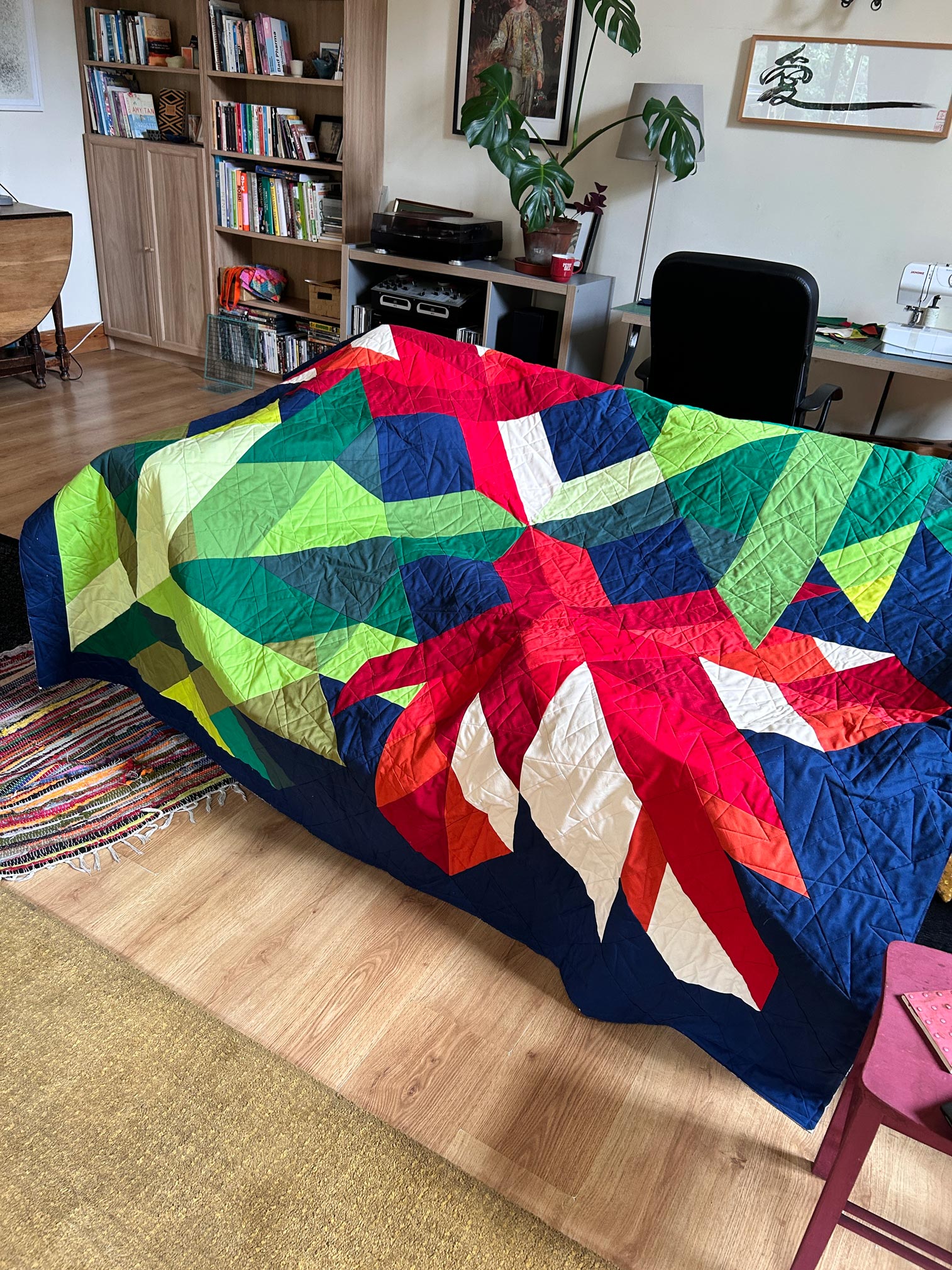
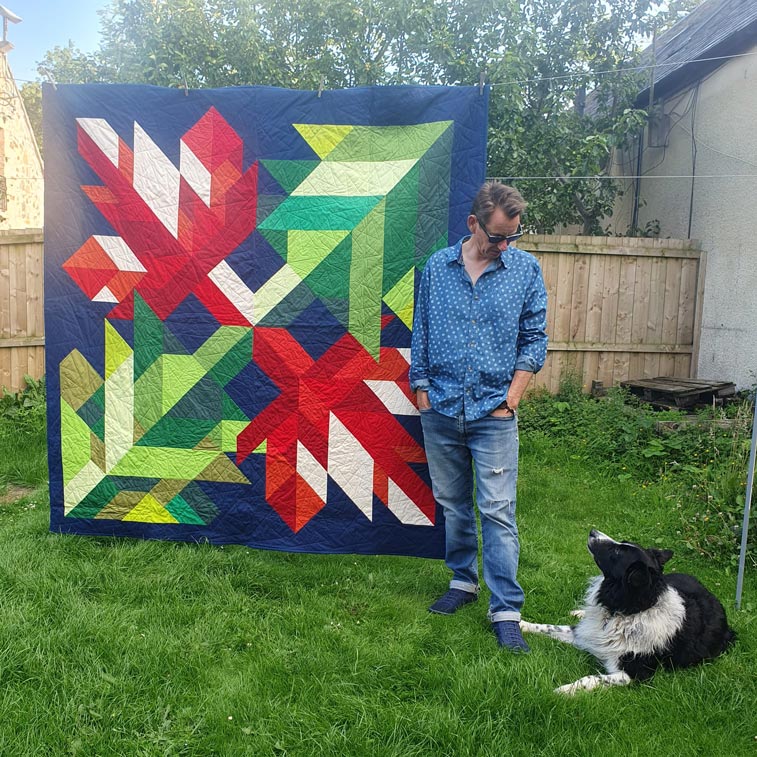
In many cultures, gifting a quilt marks the passing down of traditions and familial memory into the couple’s new household. And in some societies, quilts given at weddings carry specific motifs meant to symbolise good fortune, fertility, unity, or longevity. In this quilt I’ve fused the traditional with contemporary, and combined motifs and colours evocative of both Scotland and Canada.
I know that they both delight in trees and nature. Most of us recognise the mapel leaf as symbolic of Canada. Abundant across the country it’s emblamatic of wealth and prosperity, particularly among the early settler colonialists. The tapping of sap for syrup became a source of wealth for settlers and was a practice originated with indigenous peoples. That notwithstanding, the maple represents unity, tolerance and peace, the countries connection to nature.
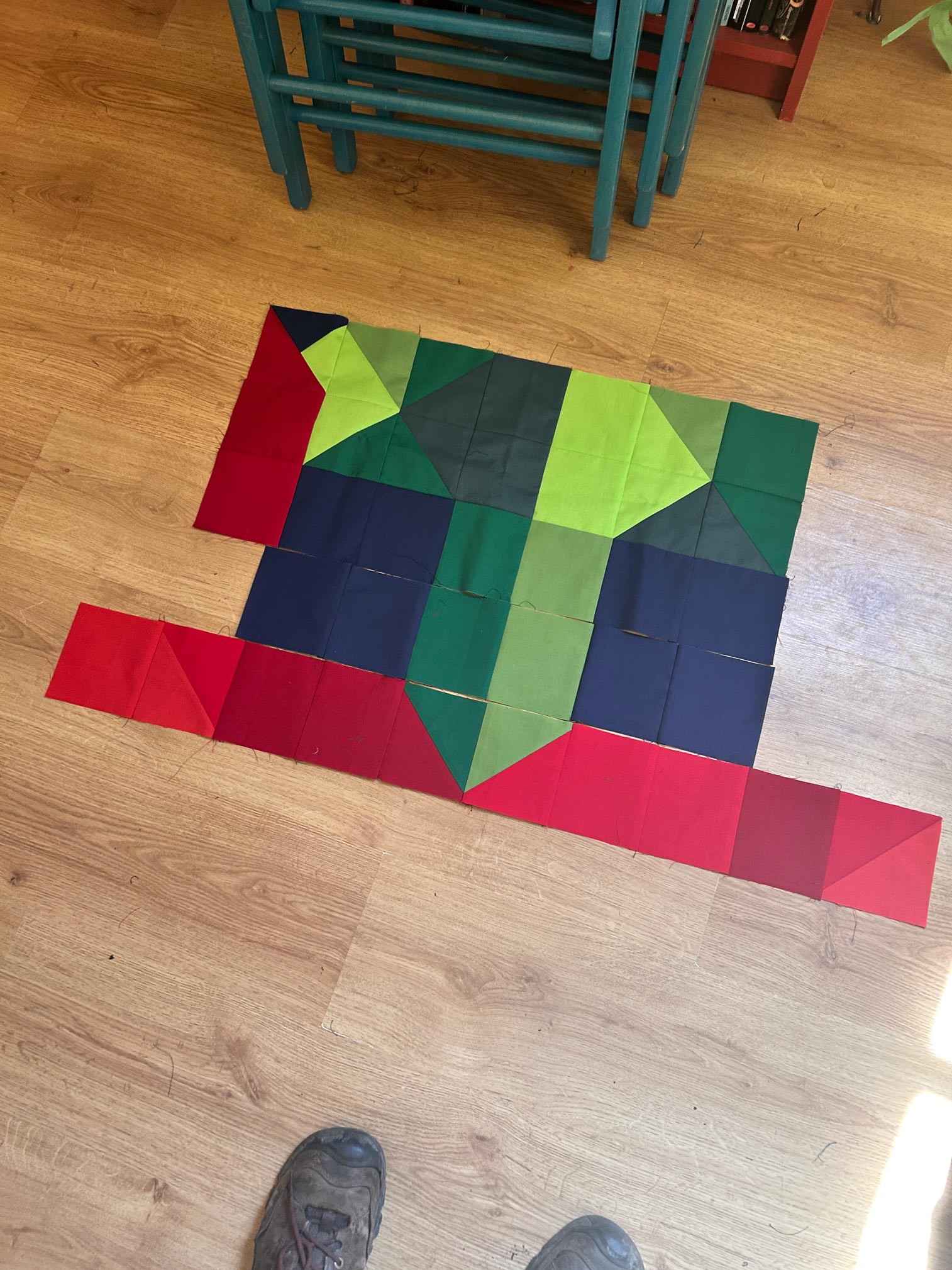
Scots Pine is native to Scotland and various pine trees grow wild and plentiful across Canada. As my daughter grew up, it a tree that’s been a constant in her landscape around the gardens and parks of Glasgow, and the woodlands of Dumfriesshire. Pine is another important symbol in quilting, particularly among the settler colonialists of North America who encountered impenetrable forests of pine when they arrived in Canada. But the pine became the source of prosperity for many. Early harvests were used as clap boards and ship masts, turpentine and resin. Tamed and domesticated, the pine represented wealth and taste, featuring in design for furniture and fabrics, particularly with the development of palampores and their imitators. So with this entangle of local and national stories, histories and personal relevance, I hope that the quilt creates a shared story that they can pass to their children and beyond.



 andrewwelsby